
The first basement I finished had everything going for it except one thing: it was a basement. Cool slab, borderline-humid summers, and that faint “concrete smell” that never really leaves. I put carpet down anyway because I wanted it cozy. It was cozy for a while, and then the musty odor showed up right on schedule.
If your basement is even a little damp-prone, carpet can still work, but you have to pick the right carpet style and the right pad material, and you have to be honest about moisture. This guide is how I’d walk a neighbor through it on a Saturday: what to buy, what to avoid, and the small details that keep a soft floor from turning into a mold farm.
Before you shop
Carpet is forgiving on feet, quiet, and warm, but it is also a sponge for humidity if you build the sandwich wrong. By “sandwich,” I mean the whole stack-up: carpet + pad + what is under it (usually a concrete slab, sometimes a subfloor system).
I like carpet in basements that are controlled, meaning:
- You are not getting puddles, active leaks, or regular seepage.
- You can keep basement humidity around 50% or lower most of the time.
- If you are above about 60% RH for extended periods, consider that a red flag you need to fix first.
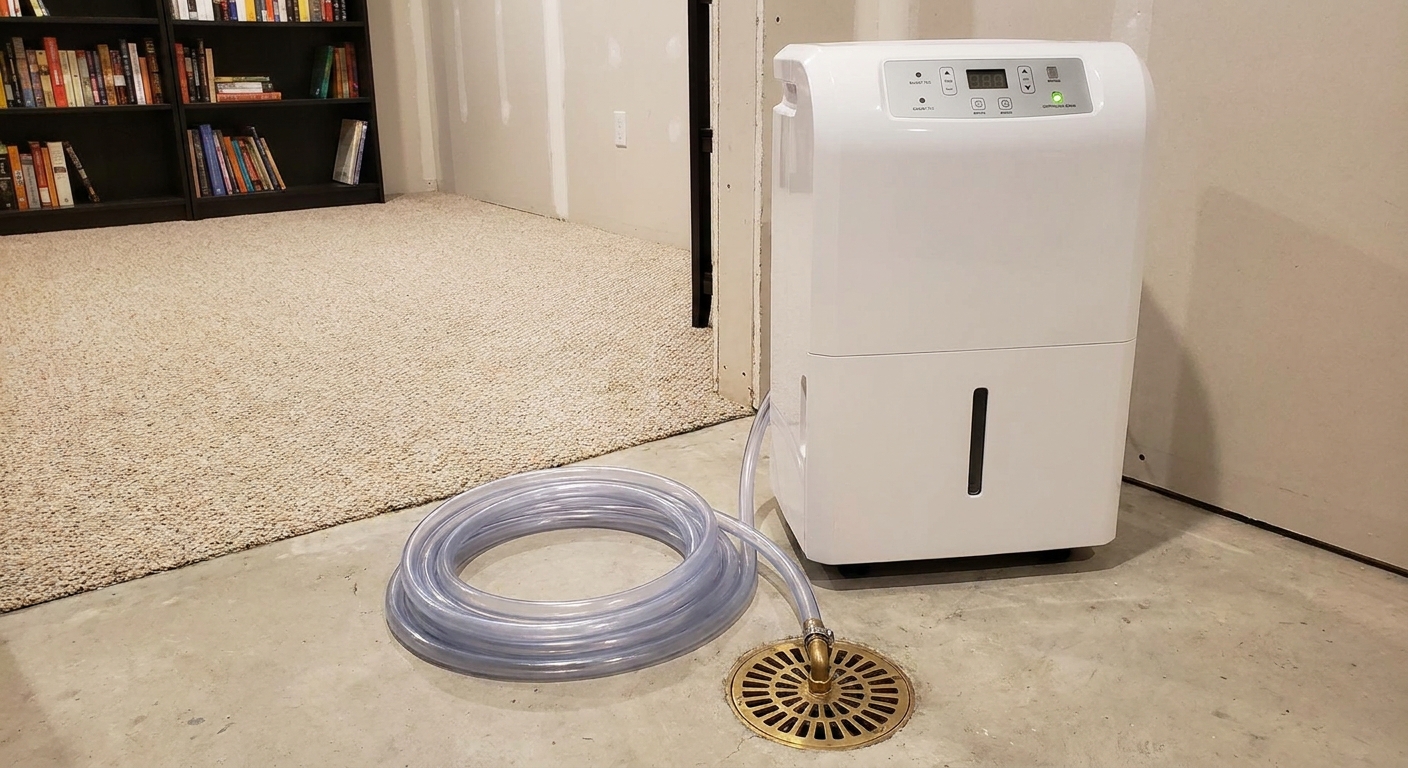
- You can run a dehumidifier as needed.
If you are still chasing water, stop and fix the water first. Start outside with grading and downspouts, then work inward if needed. These two pages are where I’d begin:
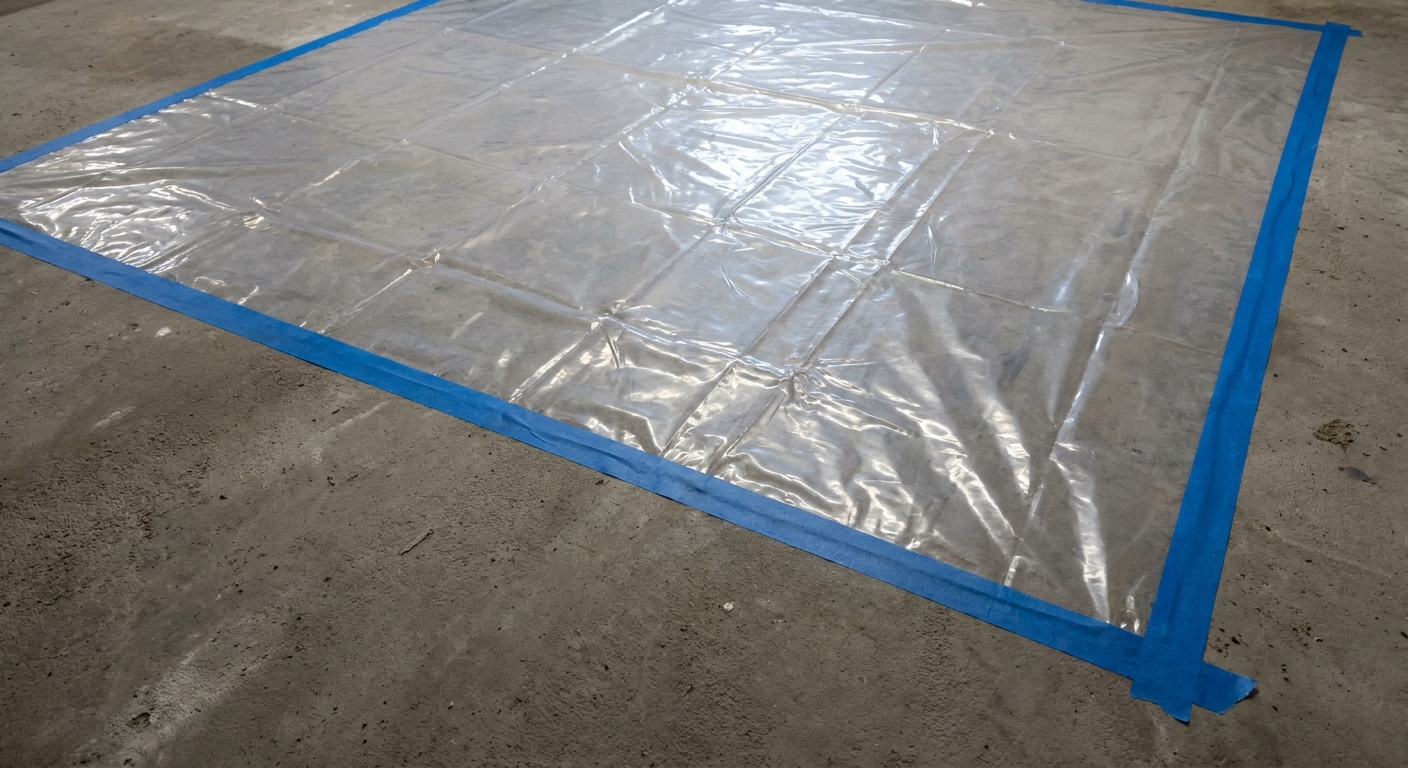
And if you have never tested the slab, do not guess. Use a simple slab moisture check so you know what you are dealing with: Test a basement slab for moisture emissions.
Red flags
If any of these are true, I would not install carpet yet:
- Efflorescence (that white, crusty mineral staining) that keeps coming back.
- Recurring damp spots or darkened concrete, even if it “dries up later.”
- A musty smell that comes and goes with the seasons.
- Recent flooding, a sump failure history, or you are still diagnosing where water is coming from.
- You need to run fans and open windows just to make the basement feel normal.
What “breathable” means
People throw around “breathable” like it is magic. Concrete does not need to “breathe” for its own sake. The risk is trapping moisture at the carpet-to-slab interface so it cannot dry, which is where odors and microbial growth start to get comfortable.
In a basement, you want a floor assembly that does two things that feel contradictory:
- Does not absorb water easily (so it does not stay wet and feed odors).
- Does not trap vapor against the slab (so incidental moisture is not locked under a plastic layer).
That is why the best basement carpet setups usually combine a synthetic, low-absorption carpet with a moisture-tolerant pad that either dries well or is installed over a subfloor approach.
Best carpet fibers
Polypropylene (olefin)
If I’m trying to minimize mold risk, I start with polypropylene (often called olefin). It is naturally resistant to moisture absorption and staining. The tradeoff is it is not always as resilient under heavy traffic as nylon, but in a basement family room, playroom, or guest space it can be a smart choice.
- Why it works: low water absorption, less likely to hold onto that musty smell.
- Watch for: crushing or matting in high-traffic lanes if you choose a cheap, loose construction.
Nylon
Nylon is tough and bounces back well. For basements, I like nylon when it is a low pile and you are confident your humidity is controlled. Nylon itself does not “rot,” but it can still hold moisture in the carpet structure, and whatever dust and skin cells collect there can feed odor if things stay damp.
- Why it works: best wear resistance for stairs and busy basements.
- Watch for: plush, thick piles that take longer to dry if you ever have a spill or humidity spike.
Polyester (PET) and triexta
Polyester and triexta carpets can feel soft and resist many stains, but I treat them as a “maybe” in damp-prone basements. They can be more prone to matting in traffic lanes, and softness often comes with a construction that holds onto moisture longer than a tighter, lower pile option. If you go this direction, I would be picky about a dense, low pile build and keep humidity in check.
Best carpet styles
Go low pile
The basement-friendly theme is simple: less fluff, fewer places to hold moisture. The best performers are usually:
- Level loop (often sold as Berber-style loops, though true Berber is a wool term). Tight, durable, and does not act like a towel.
- Low, dense cut pile (short saxony or textured cut pile). Comfortable but still dries faster than plush.
- Carpet tiles (with the right backing). Very practical in a basement because you can replace sections if something ever happens.
Avoid thick plush
I love a soft carpet as much as anyone, but basements punish it. Thick plush and high pile:
- Dry slowly after spills or humidity events.
- Hide problems until the smell tells you the truth.
- Often push you toward thicker pad choices that can trap moisture near the slab.
Pick forgiving colors
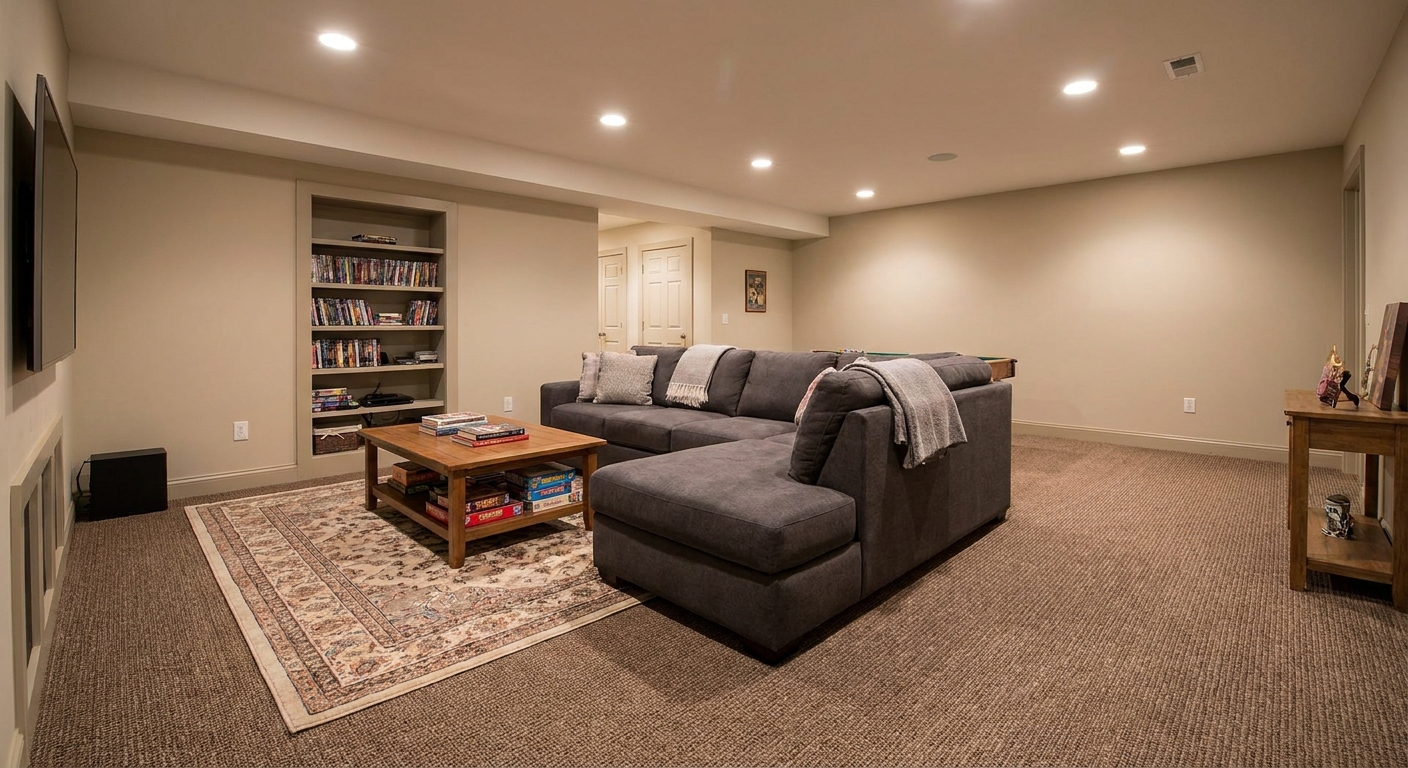
Basements are often multi-purpose spaces. A medium tone with subtle texture does a great job hiding the tiny stuff: lint, chalk dust, sawdust, the occasional snack crumb. That matters because aggressive steam cleaning is not something you want to do constantly in a basement.
The pad matters most
If you remember one thing, make it this: in basements, the pad choice matters as much as the carpet. The wrong pad can trap moisture right where you cannot see it.
Best pad materials
Waffle rubber
When I want a pad that handles basement conditions well, I look at waffle rubber. It tends to be more moisture tolerant than many foams, and the waffle texture can create tiny channels that help the system dry out after minor humidity swings.
- Pros: moisture tolerant, durable, feels supportive.
- Cons: not always the cheapest option.
Synthetic fiber pad
Synthetic fiber pads can be a solid basement choice because they do not act like a sponge the way some bonded pads can, and they handle incidental moisture better. They are also a nice match for low-pile carpets and basement stairs.
- Pros: stable, breathable feel, good for basements that you keep dehumidified.
- Cons: comfort varies by product, so feel it in-person if you can.
Foam pads, with caution
Foam pads can feel amazing, but in a damp-prone basement they can become a moisture trap, especially if they include a built-in spill barrier film. Some products are marketed as moisture barriers, which is great upstairs, but basements are different. Moisture often comes from the slab and the air, not just from a cup tipping over.
If you choose foam, keep it thin and firm, and do not pair it with a vapor-trapping carpet backing and a plastic film pad. You want the whole system to dry, not seal.
Treated pads
You will see pads marketed as antimicrobial or odor-fighting. I am not against them, but I treat that as bonus protection, not the strategy. Treatments do not fix a damp slab or a humid basement.
Thickness and firmness
For basements, I usually aim for:
- Thickness: about 3/8 inch is a safe sweet spot for many installations.
- Firmness: firmer is better in basements because it resists compression and helps prevent ripples as humidity changes.
Super thick pad feels great for a month, then it can start to feel wavy and worn where people walk. Basements already have enough variables. I do not add a squishy pad to the list.
Moisture barrier pads
This is where advice gets confusing because barrier pads solve one problem and can create another.
When they help
- Your basement is dry most of the time and you mainly want protection from top-side spills.
- The carpet and pad are both within the manufacturer’s moisture limits for below-grade installation.
When they hurt
- Your slab is still emitting moisture or you see seasonal dampness.
- You have ever had efflorescence, damp spots, or a musty odor that comes and goes.
Many spill-barrier pads are effectively vapor-retarding. That can be fine in a genuinely dry basement, but if moisture is coming up from the slab, sealing it below a carpet system can concentrate humidity at the interface. That is a recipe for odor, and in the wrong conditions, microbial growth.
If you are considering any “barrier” product, do not buy on the label alone. Ask for the perm rating (vapor permeability) and the product’s allowed moisture emission limits, then match that to your slab test results and the manufacturer’s below-grade instructions.
Two resources that pair well with carpet decisions:
Safest setup
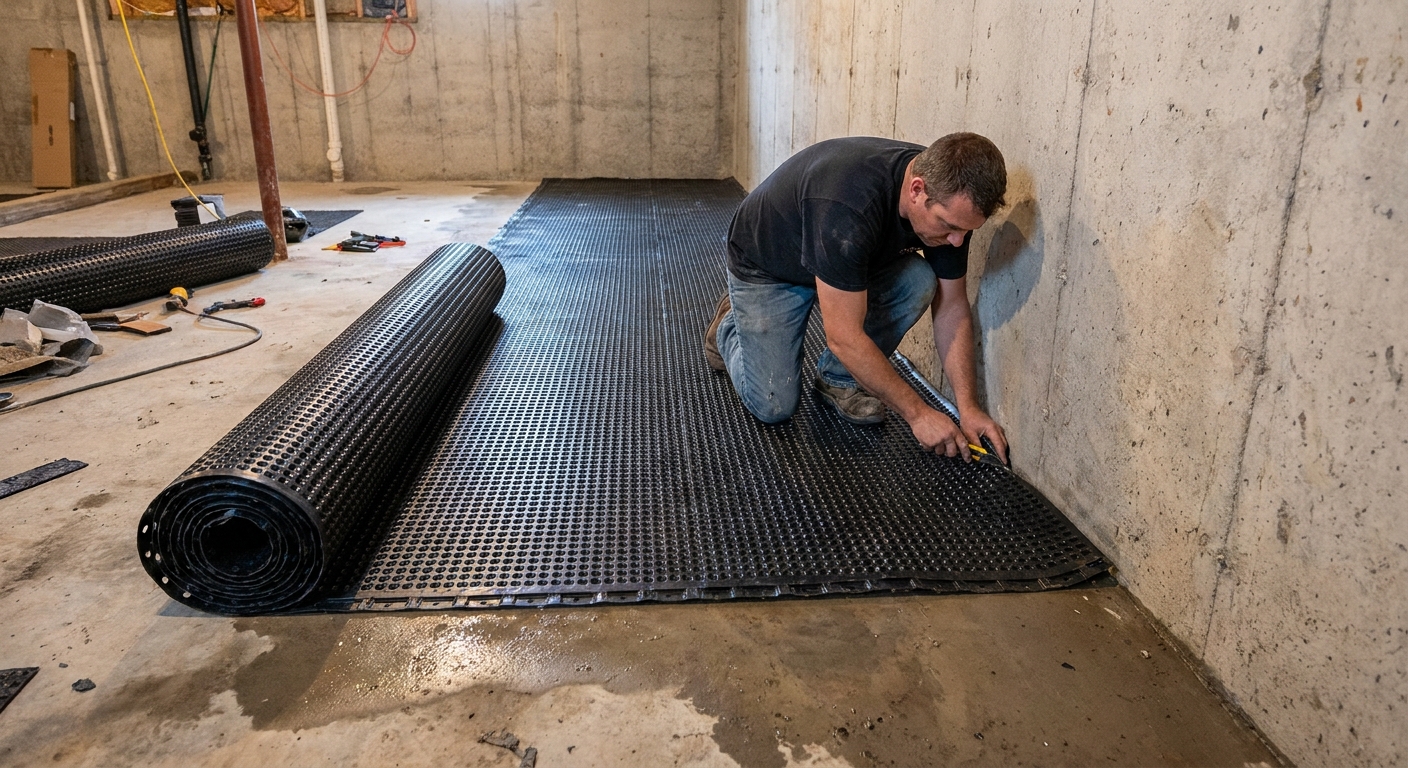
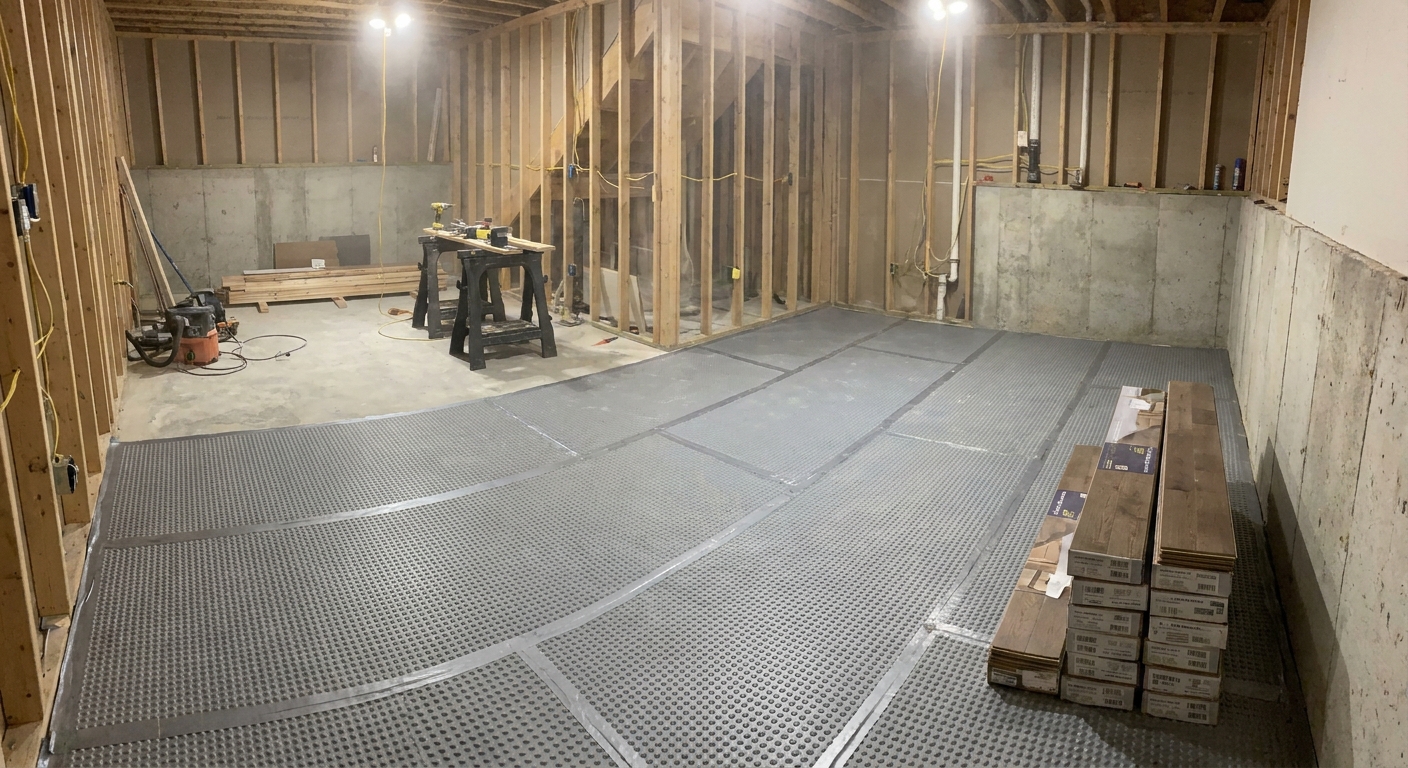
If your basement is damp-prone but you really want carpet, the most forgiving setup is usually carpet over a purpose-built basement subfloor. The idea is to create a capillary break and a more stable, warmer surface above the slab.
I go deeper on subfloor systems here: Basement subfloor systems: dimpled mats vs interlocking OSB panels.
In plain terms, a subfloor can:
- Keep the carpet system warmer (less condensation risk, more comfort).
- Provide a small air space so minor vapor is less likely to get trapped.
- Give you a flatter, cleaner surface than a patched slab.
Install details
Do not let carpet touch bare concrete
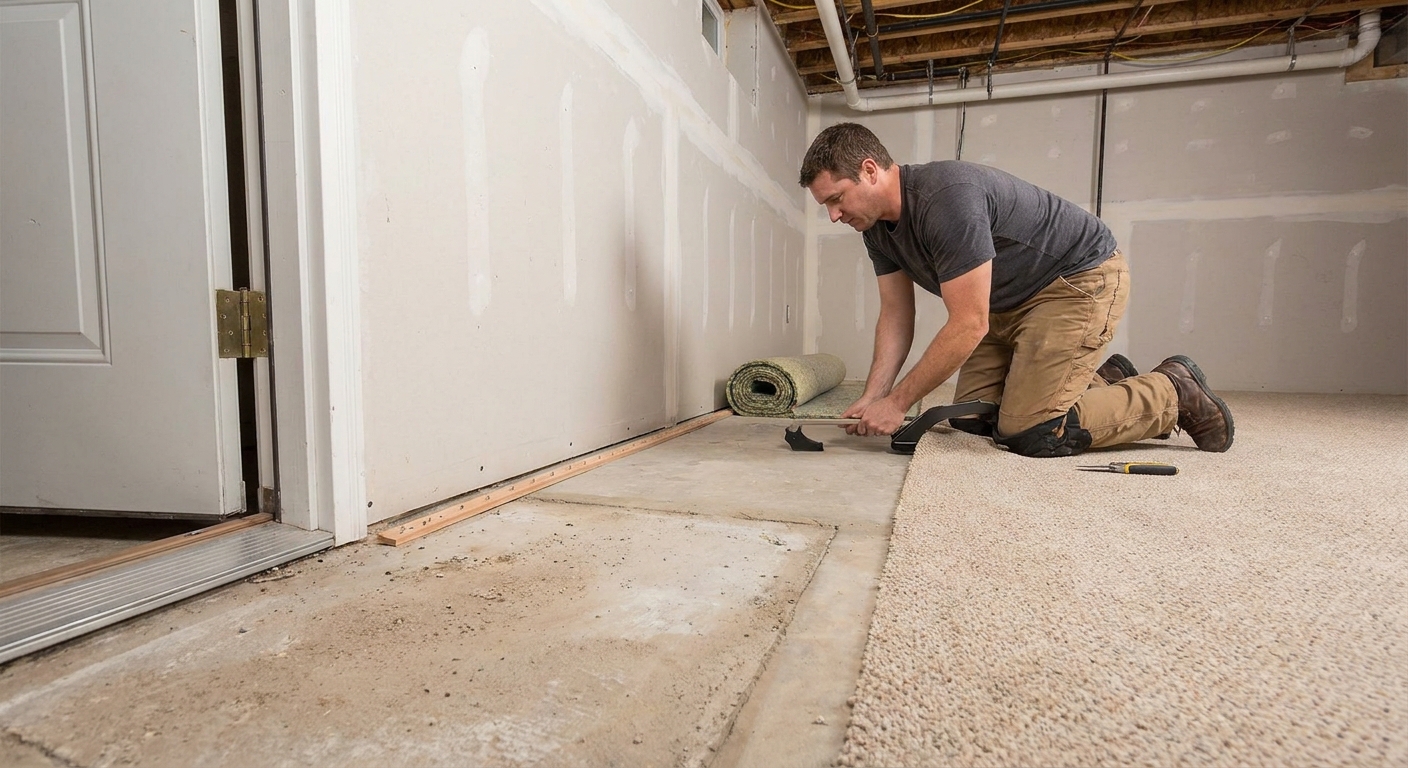
Carpet is typically stretched to tack strip near the perimeter, so you are not leaving a visible gap around the room. What you are doing is avoiding wicking contact with bare foundation concrete. The clean version of this is a finished wall detail: framed wall, drywall, and baseboard, with the carpet edge living under that baseboard and not mashed into raw concrete.
Install on a dry day
Do not install carpet right after a humid week with windows open, or right after any water event. Run your dehumidifier, get the air stable, and confirm the slab surface is dry to the touch everywhere.
Carpet tiles: watch the adhesive
If you go with carpet tiles, pick tiles that are explicitly rated for below-grade use, and pay attention to the recommended adhesive system and its moisture limits. In basements, I prefer systems that let you lift and replace tiles without destroying the slab. I also avoid fully troweled wet-set adhesives unless the slab moisture is clearly within spec.
Plan for seasons
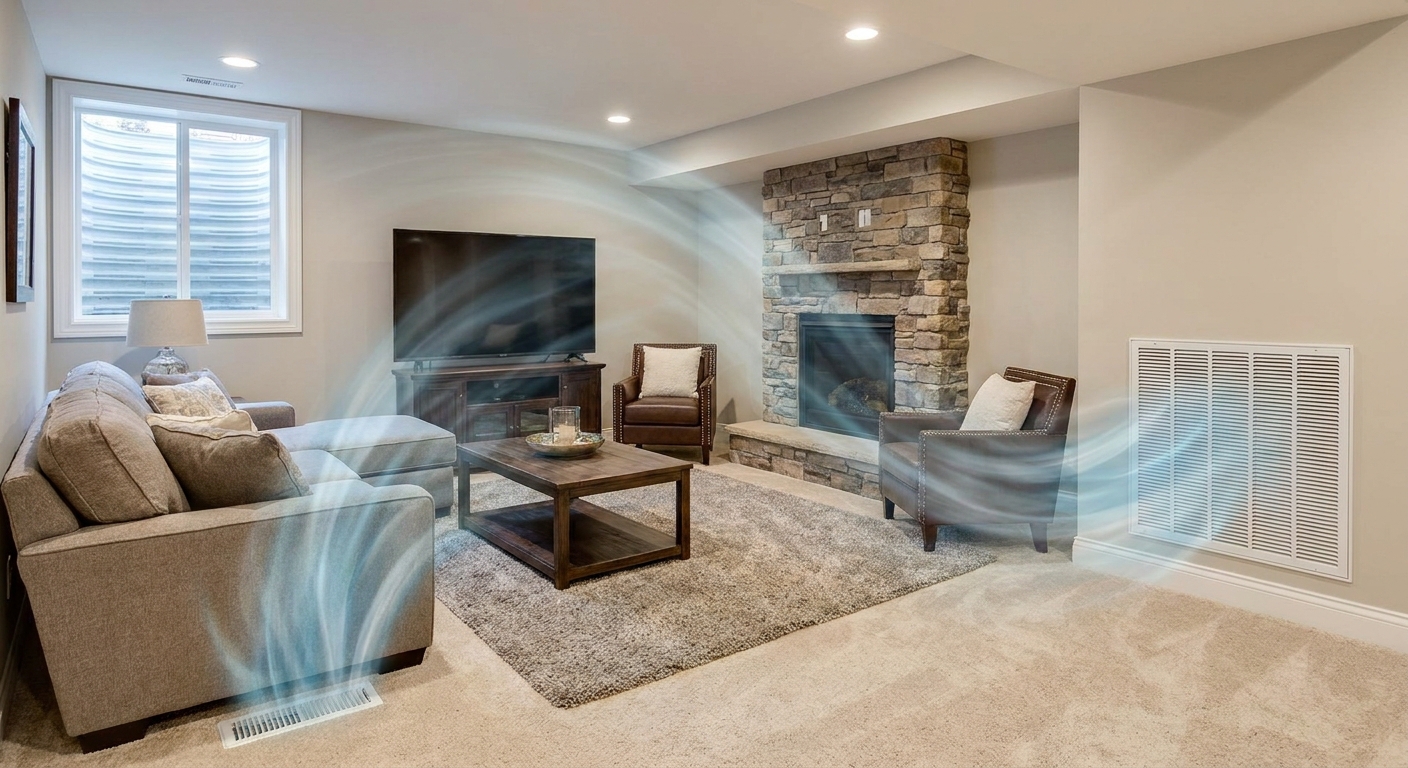
Basements change with the seasons. If your basement is comfortable in January but clammy in July, that is your warning. Solve it with ventilation and dehumidification, not with thicker carpet.
Care and cleaning
- Keep RH in range: aim around 50% or lower, and treat extended time over 60% as a problem to solve.
- Clean spills fast: blot, do not soak, and get airflow moving until the area is truly dry.
- Avoid overwetting: heavy steam extraction can push water into the pad where it dries slowly. Use the least moisture that gets the job done.
Quick checklist
- I want a synthetic carpet suitable for below-grade spaces, preferably low pile and tight construction.
- I want a pad that is moisture tolerant, like waffle rubber or a synthetic fiber pad.
- I want to avoid a setup that seals moisture against the slab unless I am sure my slab is dry year-round and the products are rated for it.
- If I am unsure, I want to consider a subfloor system under the carpet for added protection and comfort.
Basement carpet FAQs
Can carpet get moldy without flooding?
Yes. You do not need a flood to get a musty carpet. Long periods of elevated humidity, slab vapor, and slow drying after normal life spills can do it. That is why I treat carpet selection and pad selection as a moisture-management decision, not just a decor decision.
Is carpet tile better?
Often, yes. The ability to lift and replace a section is huge in a basement. Just make sure the tile is rated for below-grade use and the adhesive system matches the slab moisture reality.
Biggest mistake?
Installing plush carpet with a pad system that traps moisture, while also ignoring the basement’s humidity. Carpet can be basement-friendly, but only if the basement is kept basement-friendly.
My go-to recipe
If you want the short version of what I install when a basement is “damp-prone but controlled,” here it is:
- Carpet: low pile loop or low dense cut pile in polypropylene or a basement-rated nylon.
- Pad: waffle rubber or synthetic fiber pad, moderate thickness, on the firm side.
- Bonus protection: consider a subfloor system if the slab is cold, the room feels clammy seasonally, or you have any doubt at all.
- Always: keep humidity in check with ventilation and dehumidification.
A basement is absolutely a home’s most untapped asset. You just have to respect the physics of concrete and water while you make it comfortable.