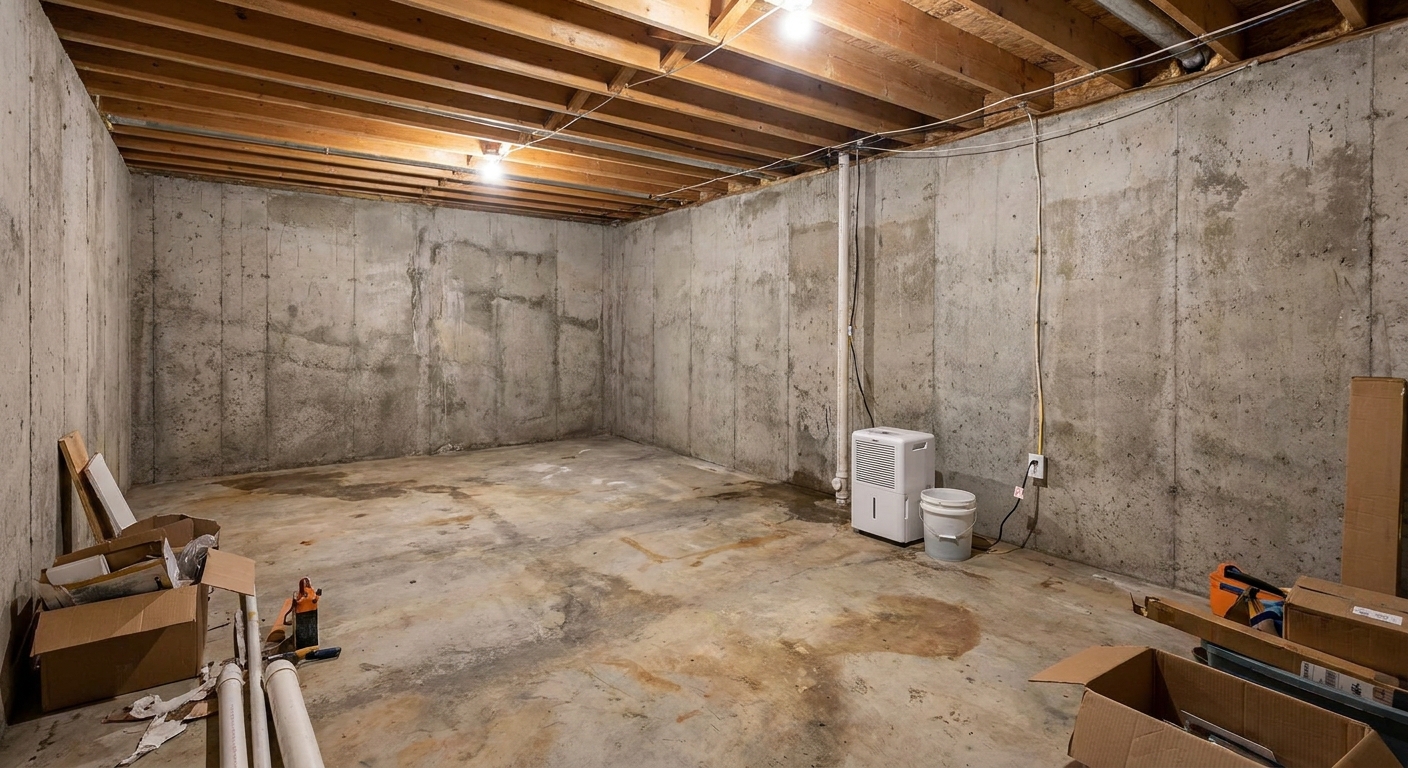

The first basement I ever finished looked great on day one and smelled like a gym bag by week three. The culprit was not paint or new carpet. It was air that never really moved. Basements are naturally cooler, closer to moisture sources, and often functionally sealed up because windows stay shut and there is no intentional fresh-air plan. At the same time, plenty of basements are still leaky at rim joists and penetrations. Either way, the result is common: stale pockets, lingering odors, and a space that never feels quite as “alive” as the rest of the house.
Below are ventilation strategies I have used in my own projects and for friends and family. We will start with quick wins and work up to whole-house style solutions like ERVs. Along the way, I will explain what each option does well, what it does poorly, and where it usually belongs in a finished basement.
Ventilation vs circulation vs dehumidification
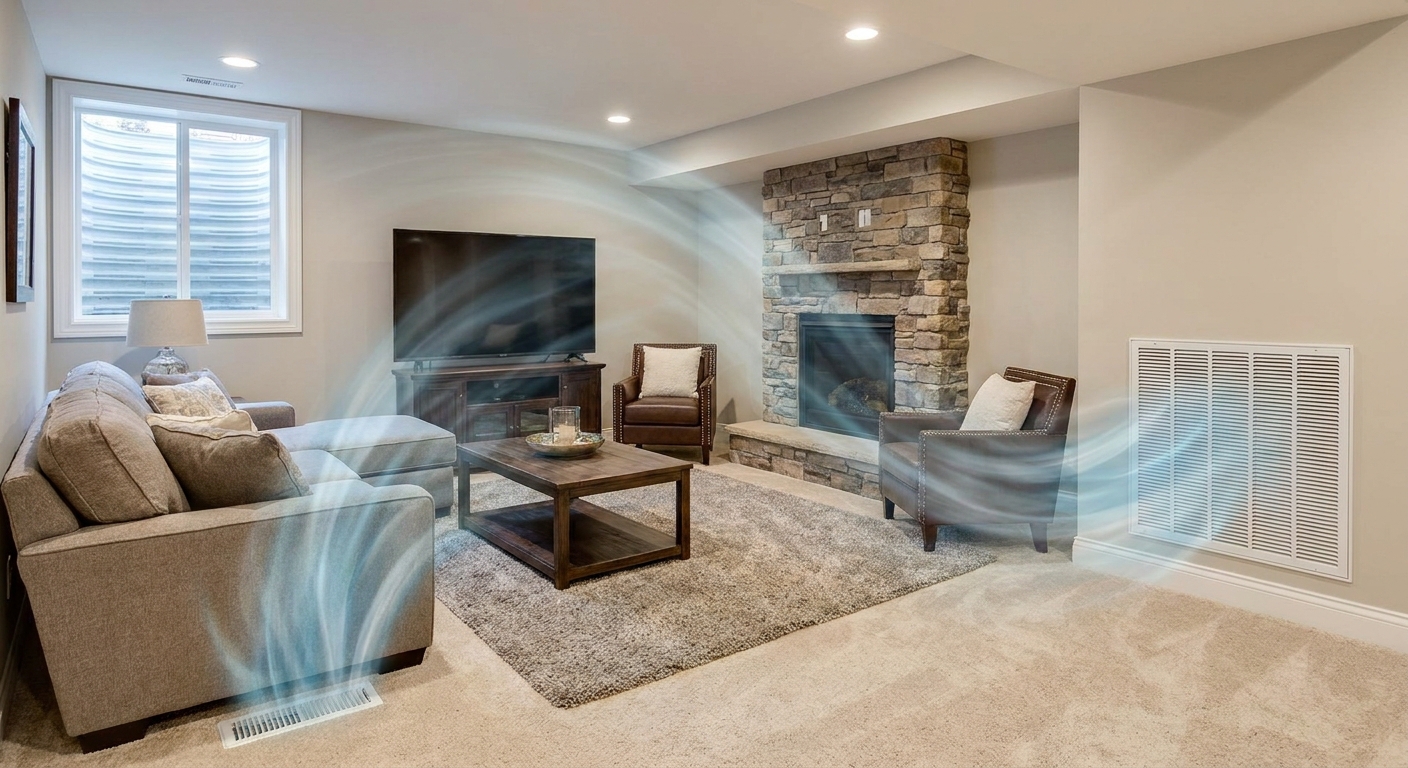
Homeowners often try to solve basement odor with a bigger dehumidifier. Dehumidification helps, but it does not automatically fix stale air. Also, a lot of what people call “ventilation” is really just air circulation.
- Ventilation brings in outdoor air and exhausts stale indoor air. This is what reduces indoor pollutants, clears off-gassing from finishes, and helps with that closed-up feeling.
- Circulation (redistribution) moves air within the home, like running the HVAC fan to mix basement air with upstairs air. This can help even out temperatures and reduce odor pockets, but it is not the same as outdoor air exchange.
- Dehumidification removes moisture from the air already in the basement. This is what keeps relative humidity in the safe range so you are less likely to get mold, condensation, and warped materials.
In many basements, the best approach is both: control humidity and provide some intentional fresh air. If you are still in planning mode, start with the moisture fundamentals first. I cover the bigger moisture picture in Moisture Control, and if you are choosing equipment, see Basement Dehumidifier Sizing and System Options.
Step one: why the air gets funky
Before you buy a fan or start cutting holes, do a quick reality check. The goal is to figure out whether you have an airflow problem, a humidity problem, a water-entry problem, or some combination.
Fast signs you need better air exchange
- Musty smell that comes back a day or two after cleaning
- Basement feels heavy or stale even when humidity is reasonable
- Odors concentrate in closed rooms (guest room, theater, storage)
- Lingering smells after workouts, pets, or cooking nearby
Fast signs you have a moisture source first
- Efflorescence on walls, peeling paint, or damp spots after rain
- Condensation on cold water pipes or supply ducts
- Humidity spikes during storms even with decent air movement
If water is getting in, ventilation will not out-fan it. Handle water entry first. Two common pre-finish upgrades are interior drains and sump pumps and masonry sealants on foundation walls.
A quick monitoring habit that helps
I like having at least one inexpensive hygrometer in the basement so you can see trends, not guess. In heavily used spaces, a basic CO2 monitor can also be a useful “crowded room” proxy for whether you are getting enough fresh air. It is not perfect, but it makes ventilation problems obvious fast.
Quick wins that matter
1) Give air a path: transfer grilles and door undercuts
This is the unsexy fix that often matters the most. If your basement has a supply register but no easy way for air to return to the HVAC system, air movement stalls. For closed-off rooms, you need a pathway back out.
- Door undercut: A small gap under interior doors can help air move when the door is closed. Thick carpet can block it.
- Transfer grille: A grille through a wall or above a door allows air to move between rooms without leaving doors open.
- Jump duct: A short duct that connects high wall locations between a room and hallway, commonly used to reduce sound transfer.
If you are framing soon, plan these pathways early so you are not cutting into finished drywall later. My framing notes live under Framing & Construction.
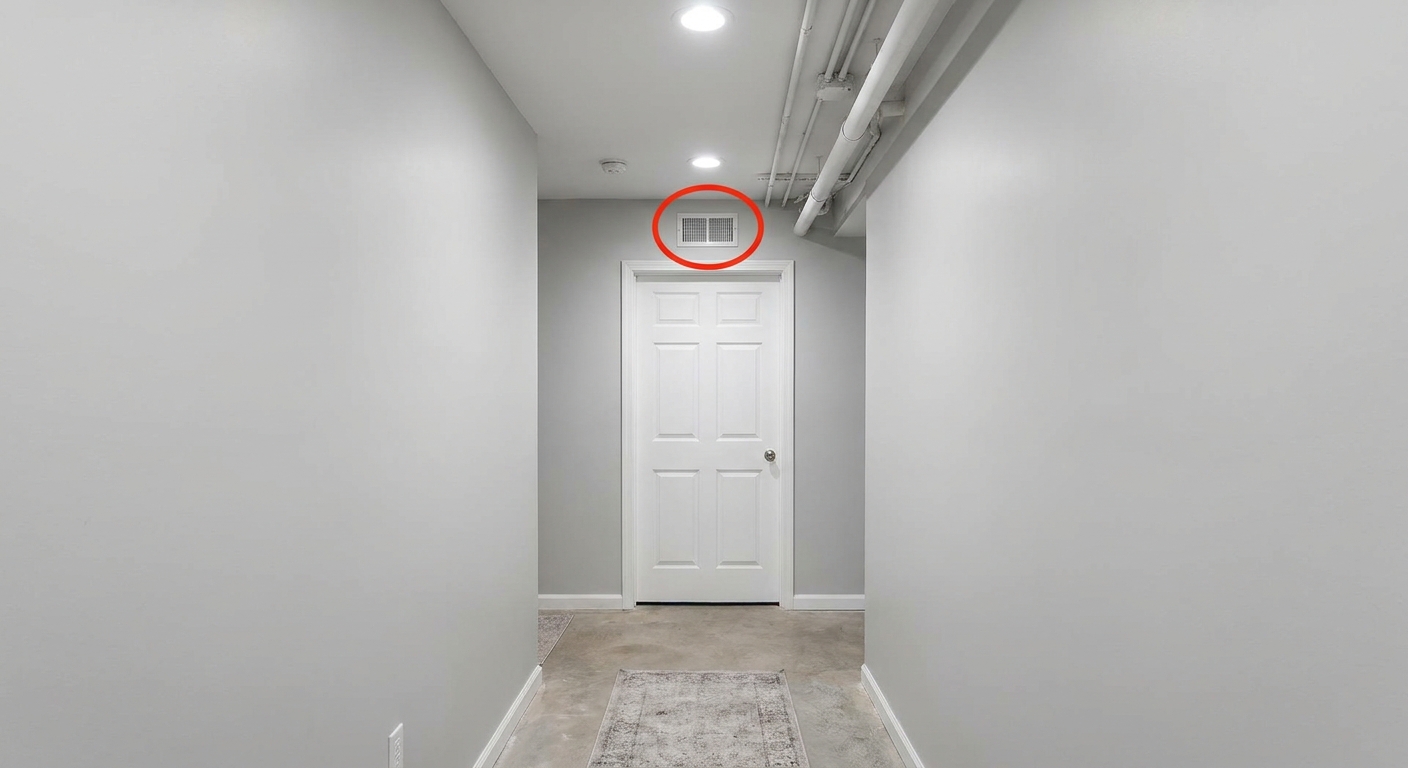
2) Run the HVAC fan strategically
If your basement is tied into your central system, your thermostat fan setting can be a low-effort way to keep air mixing. Continuous fan can help with stale areas, but it has tradeoffs.
- Pros: More consistent temperature, fewer dead zones, better filtration if you have a good filter.
- Cons: Higher electricity use and, in some homes and system setups, it can increase humidity. This can happen if moisture on the AC coil re-evaporates between cooling cycles or if the fan mixes in more humid air from elsewhere.
I prefer an intermittent circulation setting if your thermostat supports it, or a schedule that runs the fan part of each hour. If humidity is already a battle, watch your basement RH for a week after you change fan habits.
3) Spot exhaust where odors and moisture are created
If your finished basement includes a bathroom, laundry area, or a little bar sink, exhaust is your friend. The trick is to vent it outdoors correctly and use it consistently.
- Bathroom: Use a proper bathroom exhaust fan vented outside, not into the joist bay and not into the attic.
- Laundry: Keep the dryer vent clean and properly ducted. If you have a utility sink, consider a small exhaust fan if that corner gets stale.
- Workout room: A quiet exhaust fan on a timer can clear odors fast.
If you are trying to preserve headroom while routing ducts and vents, I laid out practical routing ideas in Basement Plumbing and HVAC Without Losing Ceiling Height.
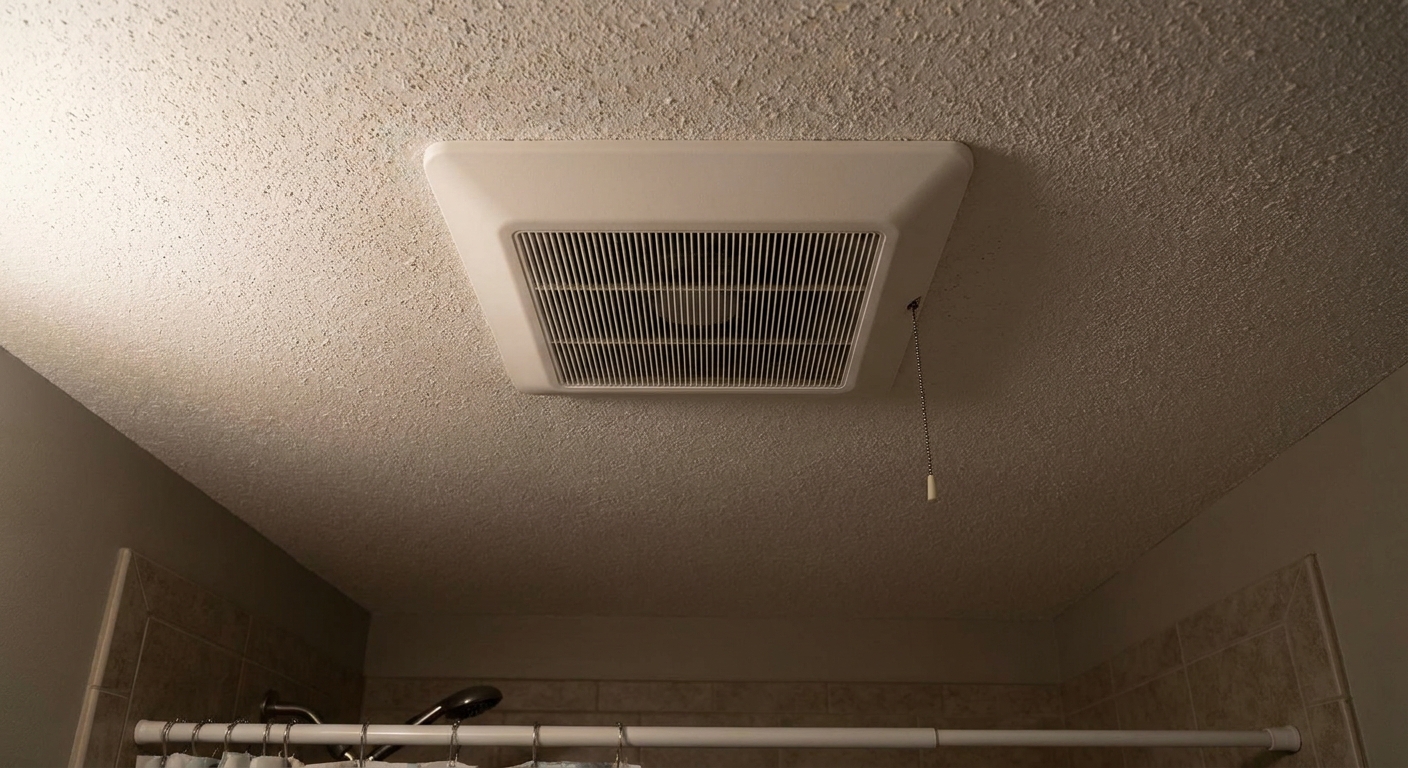
Passive ventilation: when it helps
Passive ventilation is basically air movement without a powered fan. In basements, it tends to be limited because there is not much natural stack effect and windows are often small.
Basement windows and trickle vents
Opening a window can work during mild, dry weather. The catch is that in many climates, outside air is humid for big chunks of the year. Bringing that air in can raise basement humidity and create more long-term odor issues.
If you use windows for fresh air, do it intentionally:
- Use it during drier outdoor conditions.
- Pair it with a dehumidifier if your basement tends to climb above 50 to 55 percent RH.
- Do not rely on cracked windows as your only solution if the basement is occupied daily.
Why passive vents alone disappoint
Odors linger because the same air keeps cycling in the same zone. Without a pressure difference and a clear airflow path in and out, passive vents can turn into openings that do not create reliable airflow. I treat passive options as a supplement, not a plan.
Exhaust-only ventilation
Exhaust-only ventilation means a fan pushes indoor air out, and makeup air leaks in from elsewhere. It is common because it is inexpensive and easy to install. It can also backfire if you do not respect building pressures.
Good uses
- Dedicated exhaust in basement bathrooms
- A timer-controlled exhaust fan in a stale storage room
- Occasional air purge after painting, new flooring, or a party
Risks to watch
- Backdrafting combustion appliances: If you have naturally drafted gas appliances (older water heaters, furnaces, boilers) in the basement, strong exhaust can pull combustion gases the wrong way. Sealed-combustion and direct-vent equipment is generally less susceptible, but you still want the setup evaluated if you are making ventilation changes.
- Pulling in damp air: Makeup air can come from rim joists, sill plates, or other leaky areas that also carry moisture and odors.
If your basement has combustion appliances, balanced ventilation (like an ERV or HRV) is often the safer long-term play.
Make central HVAC work downstairs
A lot of finished basements technically have heat and AC but still feel stale because the system was never balanced for below-grade living space.
What I look for
- At least one return path: Either a dedicated return duct or a clear transfer route back to a central return.
- Supply placement: Supplies are often best along exterior walls or areas that run cooler, but every basement layout is different.
- Closed rooms: Bedrooms and offices need a return strategy when doors are shut.
If you are designing a basement layout now, this is the time to build these pathways into the plan rather than treating air movement as an afterthought. See How to Design a Basement Floor Plan.
Dehumidifiers: the quiet workhorse
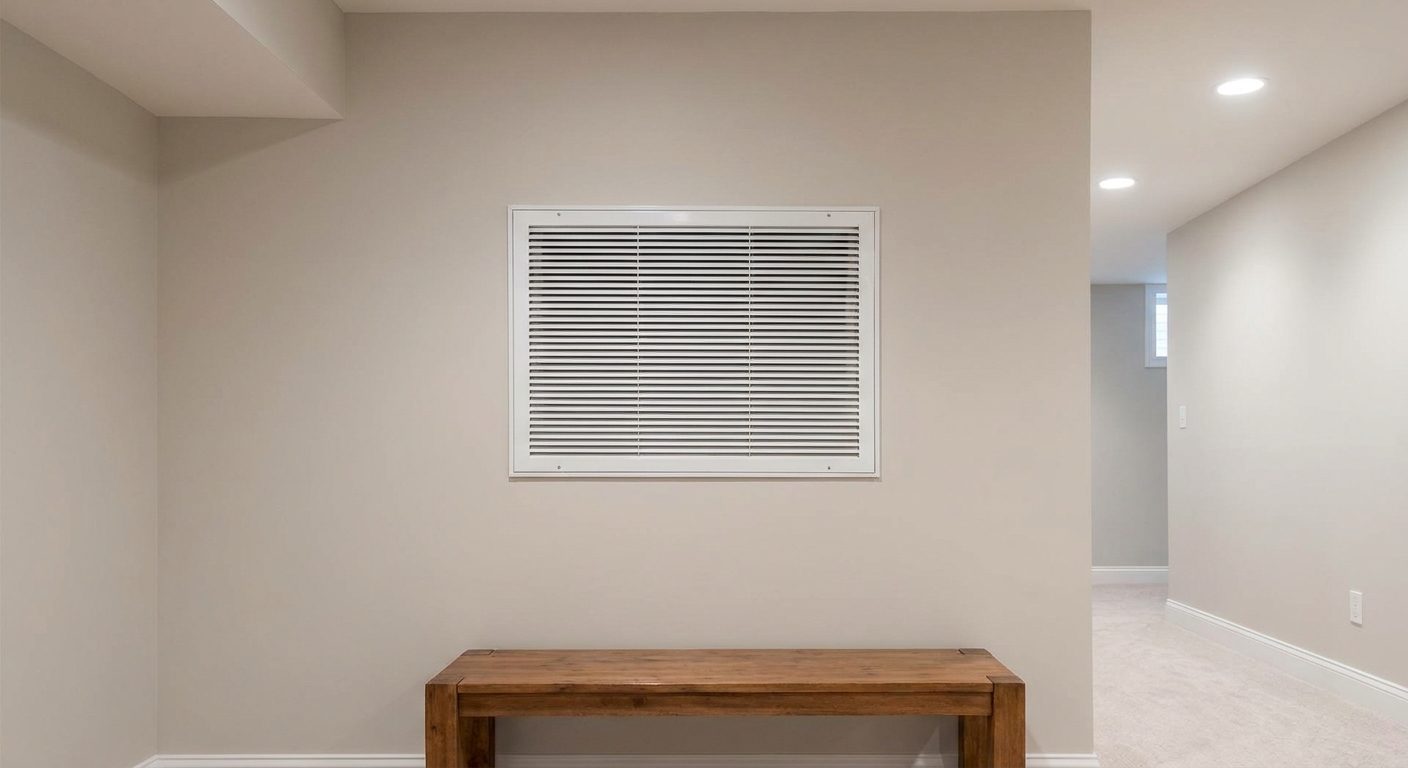
A dehumidifier is not ventilation. It does not bring in outdoor air. But if I had to pick one piece of equipment that prevents the most basement “smell problems,” it would be a properly sized dehumidifier that drains automatically. Keeping RH steady prevents mold-friendly conditions, and it also reduces that damp odor that clings to fabrics and carpet pad.
Two setups that work well
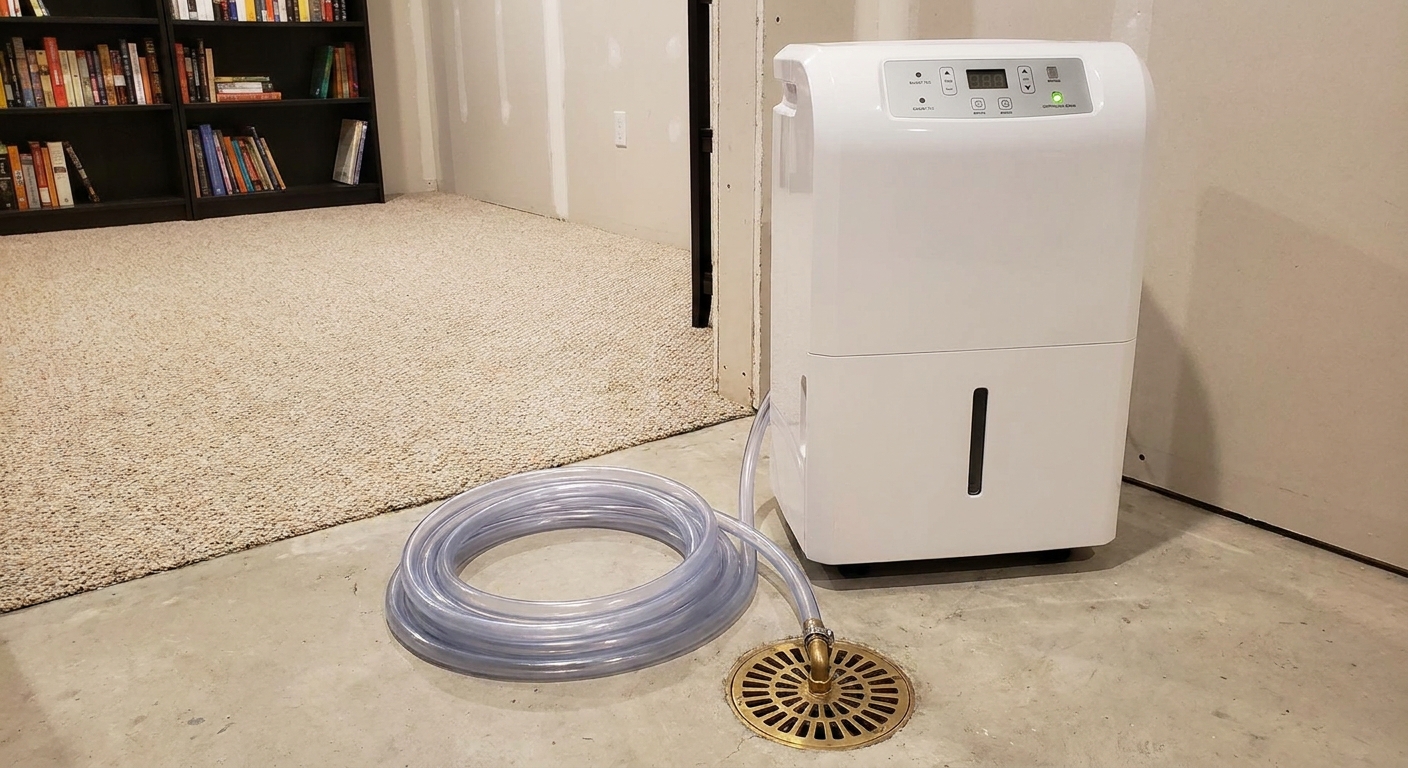
- Portable unit (short-term or smaller spaces): Put it near a floor drain or use a condensate pump to a sink or drain. Emptying a bucket gets old fast.
- Ducted whole-basement dehumidifier (best for larger finished basements): Pulls air from one area and supplies dry air to another, which helps circulation and humidity control at the same time.
If you want help thinking through sizing, drain options, and ducted vs portable, start here: Basement Dehumidifier Sizing and System Options.
ERV and HRV systems
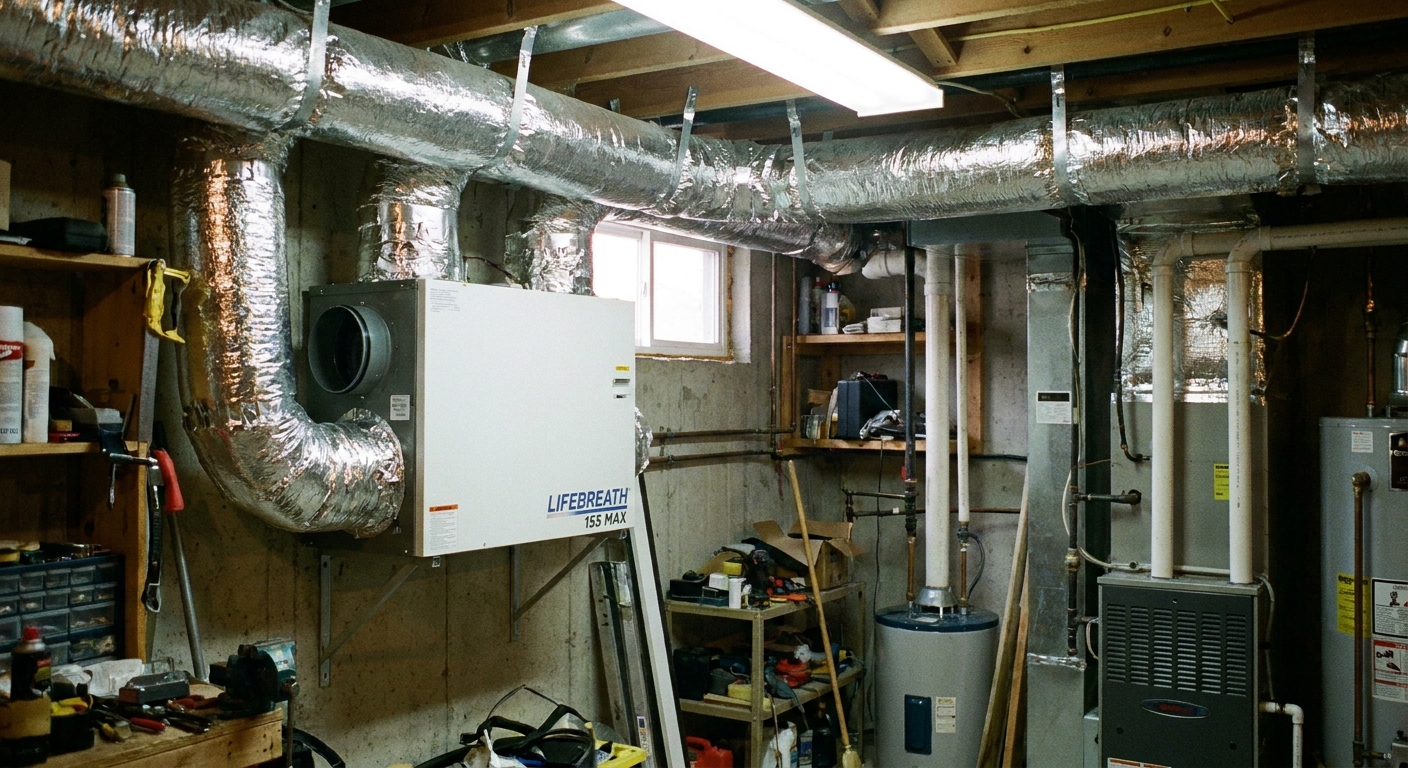
An ERV (energy recovery ventilator) is my favorite solution for basements that are truly finished and lived in. It brings in outdoor air and exhausts stale indoor air while transferring some heat and moisture between the streams. The big win is you get real air exchange with less comfort penalty than simple exhaust or supply-only setups.
One important nuance: ERVs do not erase humidity issues in muggy weather, they just reduce the load compared to straight ventilation. And depending on your climate and indoor humidity goals, an HRV can be a better fit than an ERV. This is one of those cases where a good HVAC designer earns their keep.
When it makes sense
- Basement bedrooms or guest suites that are used regularly
- Home theaters and offices where doors stay closed
- Tight homes where natural air leakage is low
- Basements with persistent odor issues despite good humidity control
What to know before you buy
- Installation complexity: ERVs and HRVs need ducting to outside and to indoor pickup and supply points. Plan routes early so you are not boxing soffits everywhere.
- Filters and maintenance: Like any ventilation equipment, they need periodic cleaning and filter changes.
- Noise and placement: Put the unit where sound is not a daily annoyance, like a mechanical room with a solid door.
If you like to geek out on the science, ASHRAE publishes residential ventilation guidance and standards that many HVAC designers reference. You can browse their resources here: https://www.ashrae.org/technical-resources/standards-and-guidelines.
Odor-proofing details people skip
Ventilation equipment helps, but little build details can make or break basement freshness.
Seal the rim joist and leaks
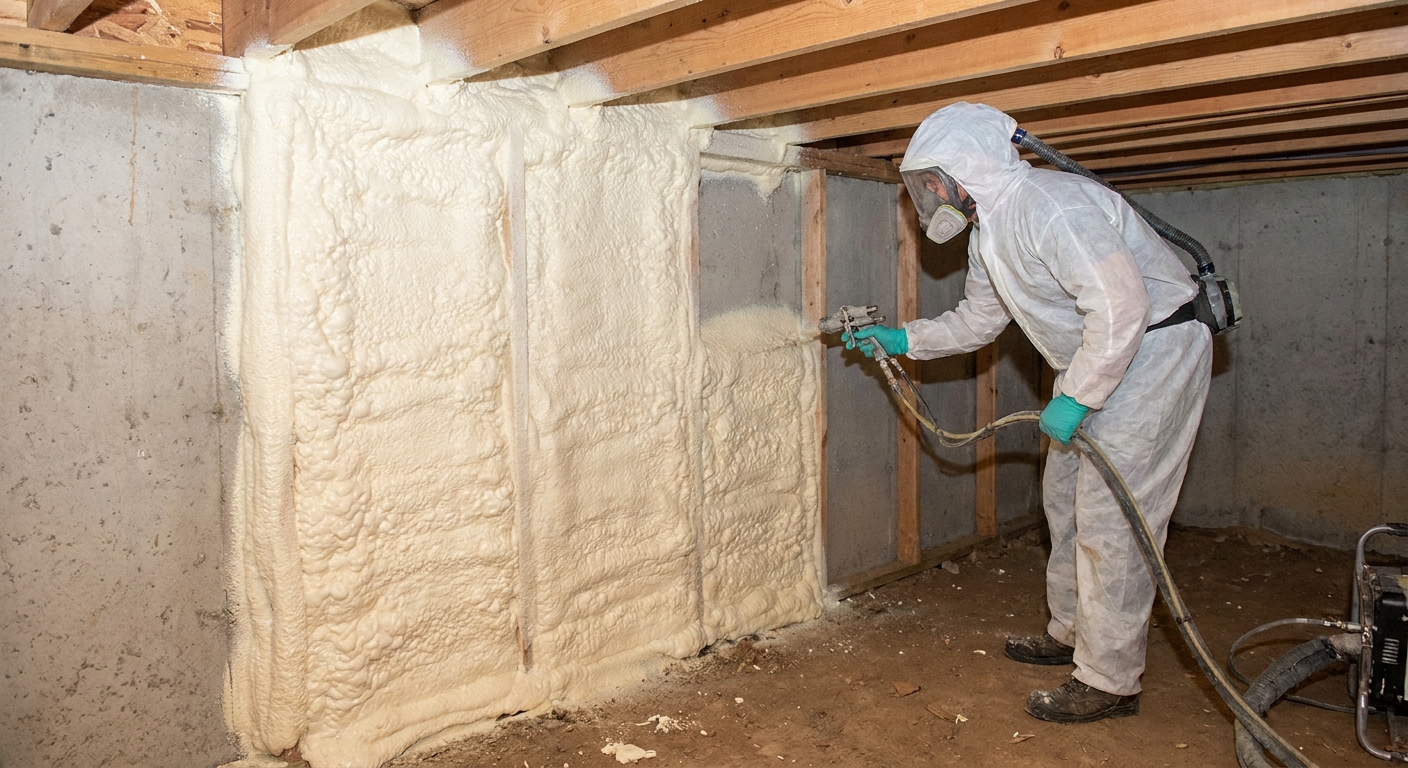
Air leakage at the rim joist can bring in musty smells and humid air. Air sealing is a big topic, but at a minimum, do not leave obvious gaps around penetrations, sill plates, and utility entries. Insulation choice matters too. If you are deciding between foam approaches, see Rigid Foam vs Spray Foam Basement Insulation for Moisture Control.
Choose basement-friendly finishes
- Flooring: Some materials hold odors when humidity spikes. If you are still choosing, start at Flooring Options.
- Paint and adhesives: Low-VOC products help with initial odors, but long-term freshness is mostly about moisture and outdoor air exchange.
Do not ignore drains and traps
Floor drains, shower drains, and unused sinks can dry out and let sewer gas into the basement. If you get a sulfur smell that comes and goes, check traps first. Sometimes the fix is as simple as adding water to a rarely used drain.
Radon is its own thing
If you live in a radon-prone area, test. Ventilation and air sealing changes can affect radon levels in either direction. I like to test before and after major basement finishing work so you are not guessing.
A simple plan to copy
If you are overwhelmed by options, here is a plan I have used on a lot of normal family basements.
Typical finished basement with a bathroom
- Bath fan: Quality, quiet exhaust fan vented outdoors, on a timer.
- Air pathways: Undercut doors or transfer grilles for any closed rooms.
- Humidity control: Dehumidifier with continuous drain, set to maintain roughly 45 to 50 percent RH.
- HVAC circulation: Ensure there is a return path. Run intermittent fan if it helps without raising humidity.
Guest suite or daily-use basement
- Everything above, plus consider an ERV or HRV for predictable fresh air.
Common mistakes
- Adding supplies with no return: The space heats and cools, but air does not move well and odors linger.
- Relying on cracked windows year-round: Great in shoulder seasons, risky in humid weather.
- Ignoring condensation points: Cold pipes and ducts can drip and feed smells. Insulate and air seal where needed.
- Skipping the pre-finish moisture steps: Ventilation is not waterproofing. If you have water problems, handle them before you hang drywall. My general sequencing advice is in Pre-Finishing Basement Checklist and Basement Remodel Timeline: Correct Order of Operations.
FAQ
What humidity should I aim for in a finished basement?
In most homes, I like a finished basement to live around 45 to 50 percent relative humidity. If you are consistently above the mid-50s, odor and mold risk go up fast. If your climate or basement conditions make 45 percent unrealistic without a lot of equipment, treat 55 percent as a practical ceiling while you improve drainage, air sealing, and dehumidification.
Will an air purifier fix musty basement odor?
It can help with particulates and some odors, but it is not a substitute for controlling humidity and exchanging stale air. Think of it as a supplement after you address moisture and airflow.
Is it okay to vent a basement bathroom fan into the soffit or rim joist area?
No. Vent it outdoors through a proper termination. Dumping moist air into building cavities is a reliable way to create moldy smells later.
Do I need permits for adding an ERV or new ventilation fan?
Rules vary by location. If you are adding new electrical circuits or modifying HVAC, permits may be required. I walk through the practical side of it here: Basement Finishing Permits: What You Need and How to Get Them.
The bottom line
A fresh-smelling basement is not an accident. It is the result of three things working together: no bulk water intrusion, steady humidity control, and intentional outdoor air exchange. Start with airflow pathways and spot exhaust, add reliable dehumidification, and if your basement is truly living space, an ERV or HRV is the upgrade that makes it feel like the rest of the house instead of the basement.
If you want more help planning your project from the ground up, you can browse the rest of the basement finishing guides on Finish Below.