
The first basement I finished had exactly two tiny window wells, both half buried behind shrubs that looked nice from the street but basically stole my daylight. I remember standing downstairs at noon thinking, “How is it darker than my closet?”
The good news is you can make basement daylight feel like it goes a lot further without changing the structure. A handful of smart finish choices can catch the light you already have, redirect it into the room, and keep it from getting swallowed by dark paint, heavy window treatments, and bulky trim.
If you want the quick workflow, do it in this order: Outside cleanup (so light can reach the glass), brighten the well, brighten the window reveal and trim, then use reflective surfaces and layout to push that daylight deeper.
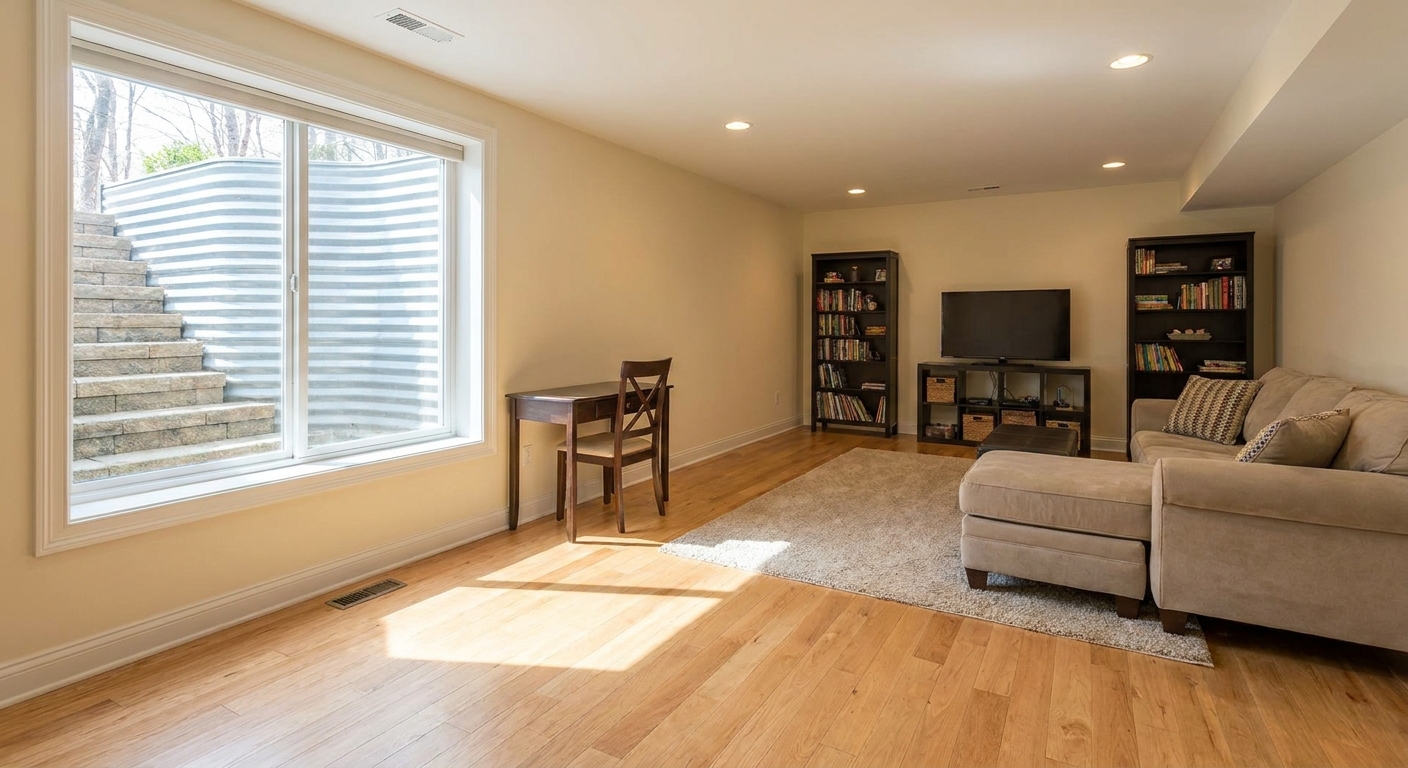
Start outside: get light to the glass
Before you buy a single mirror, step outside and look at your window well like a photographer. If the well is shaded, dirty, or covered, you are trying to amplify light that never arrives.
Clean the well, the cover, and the glass
- Wash the well walls (especially corrugated metal) and remove leaves. Grime cuts reflectivity more than you would think.
- Clean the window inside and out. Basements collect film from humidity, laundry, and storage dust.
- If you have a cover, clean it too. Many polycarbonate covers haze or yellow over time, which can dim the basement even if the cover is technically “clear.”
Trim plants that throw shade into the well
Window wells often sit under decks, bushes, or overgrown landscaping. If direct sun never hits the well, your goal shifts from “sunlight” to “sky light.” Either way, clear the opening so the well sees as much bright sky as possible.
Pick a cover that protects without killing daylight
Some covers look “smoked” or tinted. They help with glare, but they also dim the basement. If you need a cover for safety and debris control, a clear, high-transmission cover usually keeps the most usable daylight, but shape, cleanliness, and UV yellowing matter just as much as tint.
One more note: if this is an egress window, keep safety front and center. The window has to open easily, and the well needs to stay clear enough for a quick exit. Do not add anything that makes the escape path tighter or harder to use in a hurry.
If your basement has moisture issues in general, handle that first. Light tricks are great, but they do not fix damp air or musty finishes. Start with the basics in Moisture Control and make sure downspouts and grading are doing their job.
Make the well reflect light
Most window wells are a dark, light-eating pit. The fastest way to “create” more daylight is to brighten the surfaces that surround the window.
Brighten the well walls
If your well is unfinished metal, it might already reflect some light, but it also gets dirty and can look gloomy. Many homeowners brighten a well with a light-colored coating made for exterior metal or masonry. If you do, follow the manufacturer’s prep steps carefully so it does not peel.
Compatibility and safety matter here. Galvanized and corrugated metal often needs the right primer for good adhesion. And if your well is part of an egress route, avoid coatings that make surfaces slick or interfere with steps or ladders.
Add light-colored stone or gravel at the bottom
The bottom of the well matters. Dark soil and mulch absorb light. A light gravel bed reflects more light back up toward the window.
Gravel can also help keep the bottom from turning into mud, but it does not fix a clogged or missing drain. If the well does not drain properly (to a drain tile, drywell, or other approved path), water problems need a drainage solution, not just prettier rock.
Keep the inside return bright
The boxed-in framing around the window, sometimes called the return or reveal, is basically a light tunnel. Paint that tunnel a bright, light-reflective color so it bounces daylight deeper into the room instead of absorbing it right at the opening.
Optional upgrade: reflective well liners
If your well is especially dark, a brighter liner can help. Some homeowners add light-colored liners (metal or composite) so the well itself acts more like a reflector. It is not required, but it can be a noticeable upgrade when the well walls are dingy or rust-stained.
Paint that boosts daylight
Color matters, but sheen is the secret weapon in basements. The right sheen gives you bounce without turning the room into a glossy cave.
Use higher sheen on trim and the return
For basement windows, I like a semi-gloss or high-gloss on trim, the window jamb, and the return. That glossy band around the opening acts like a light scoop, especially when the sun hits the well at an angle.
Stick with eggshell or satin on walls
Flat paint can look great, but it tends to swallow light. In a basement, eggshell or satin is a safer choice for the walls near the windows because it reflects more light without showing every drywall imperfection the way high-gloss can.
Pick lighter colors where you want light to travel
You do not have to paint everything stark white, but you do want lighter colors where you want daylight to move. If your basement is windowless except for one egress, keep darker accent colors away from that wall, or use them below chair rail height so the upper wall still reflects light.
If you want a deeper dive on basement-friendly color choices, see Paint Colors That Brighten a Windowless Basement.
Mirrors: bounce the window
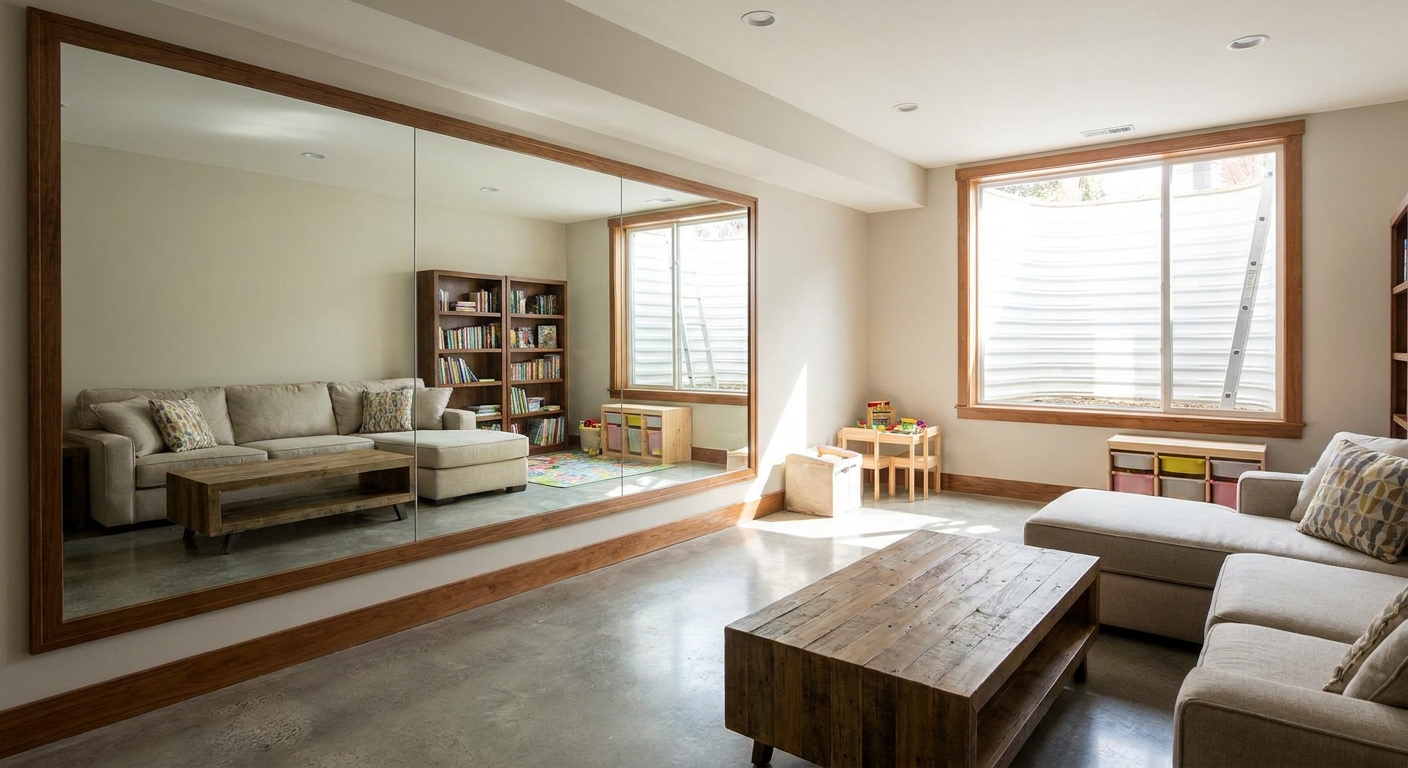
Mirrors are the most reliable “finish trick” because they redirect light. The mistake is hanging a mirror where it reflects a dark hallway or a TV screen. You want it reflecting the window opening or the bright wall opposite it.
Best mirror placements
- Opposite the window: This is the classic move. A large mirror on the wall across from the egress can dramatically increase perceived brightness.
- Perpendicular to the window: If opposite is not possible, mount a mirror on the side wall near the window so it catches incoming light and throws it into the room.
- At the end of a short hall: If the hall opens toward the windowed room, a mirror at the end can pull daylight visually into the corridor.
Mirror size tips
Bigger matters more than fancy. A single large mirror typically works better than multiple small ones because it gives a clean, bright “second window” effect.
Use glossy surfaces on purpose
Daylight fades fast when it runs into soft, dark, textured materials. You do not need to turn your basement into a glass box, but you can choose a few finishes that help light travel.
Use glass doors where it makes sense
If your basement has one bright room and several darker rooms, a door with glass (or even a half-lite) can share daylight. This works especially well for offices, gyms, and playrooms. For bedrooms, stick with privacy, of course.
Choose lighter, smoother flooring near the window
A lighter floor finish helps bounce light upward. Matte is fine, but very dark carpet right in the daylight zone will eat your gains. If you are weighing basement floor options, start here: Flooring Options.
Use satin or semi-gloss on built-ins near the window
If you are adding shelves or cabinetry near the window wall, a slightly higher sheen on the face frames and side panels helps reflect light without the high-gloss “wet look.”
Window treatments that do not block light
Basement windows are small, so heavy treatments are basically blackout curtains, even when they are open.
Go minimal at the top
- Inside-mount shades preserve the most glass area.
- Skip bulky valances that cover the upper portion of the window where the brightest sky light often lives.
- Pick light-filtering over room-darkening in non-bedroom spaces.
Keep furniture out of the landing zone
This one is painfully common. A tall bookcase or the back of a sectional pushed near the window wall blocks light from spreading across the room. Give the daylight a clear landing zone.
Trim that frames light
Basement windows are often surrounded by thick framing returns. You can either make that detail feel like a tunnel, or you can make it feel like a bright frame.
Use a slightly wider, simple casing
A wider casing in a light color gives you more reflective surface around the opening. Think of it like adding a reflector around a flashlight. Keep profiles simple so dust does not collect in deep grooves.
Use a crisp trim color in semi-gloss or high-gloss
Even if your walls are a warm off-white, a slightly crisper trim color can make the window read brighter. Pair that with semi-gloss or high-gloss for more bounce.
Ceiling tricks that spread daylight
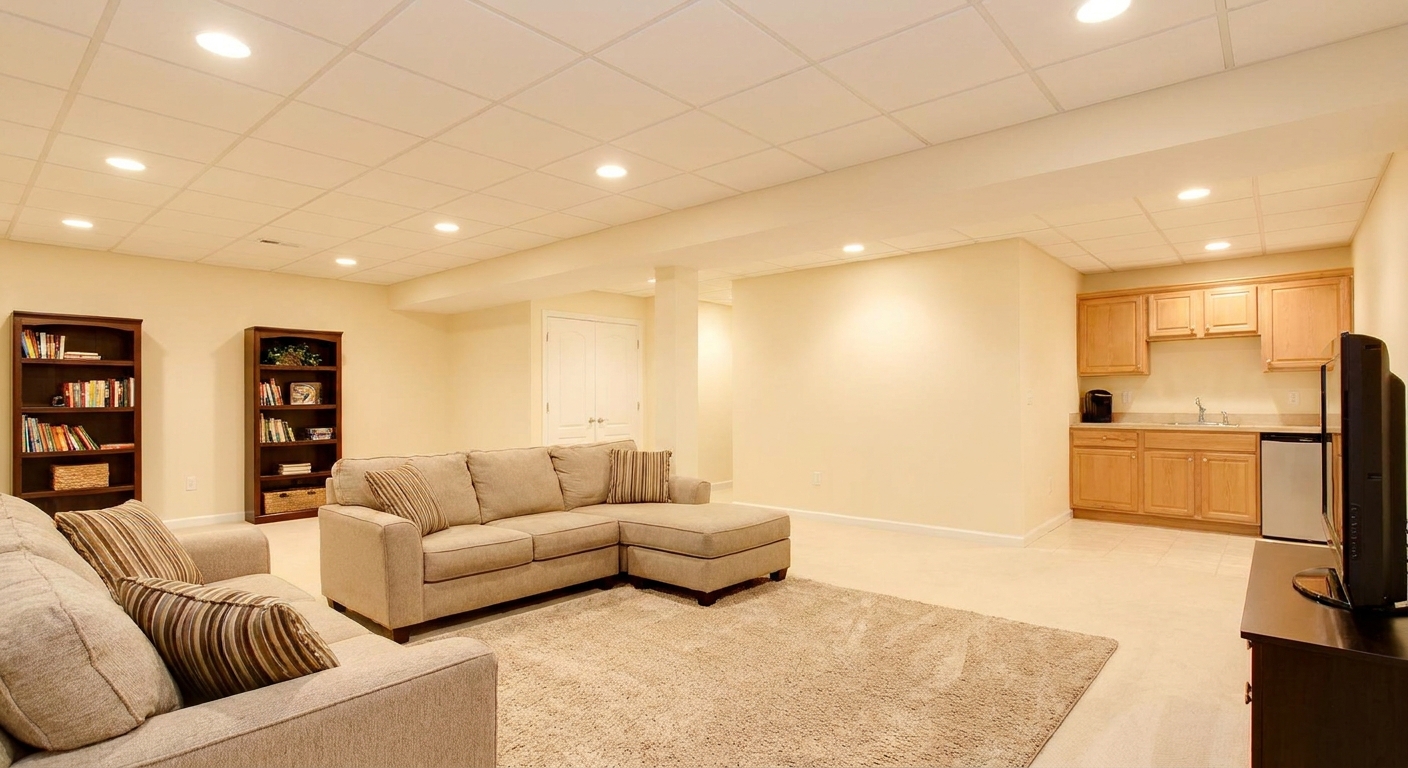
Basements usually have low ceilings, and dark ceilings are a light sink. The ceiling is your biggest uninterrupted surface, so it is the easiest place to spread daylight.
Keep the ceiling lighter than the walls
A bright ceiling reflects light down into the room. If your walls are already light, go one step lighter on the ceiling, or use the same color in a flatter sheen to avoid glare.
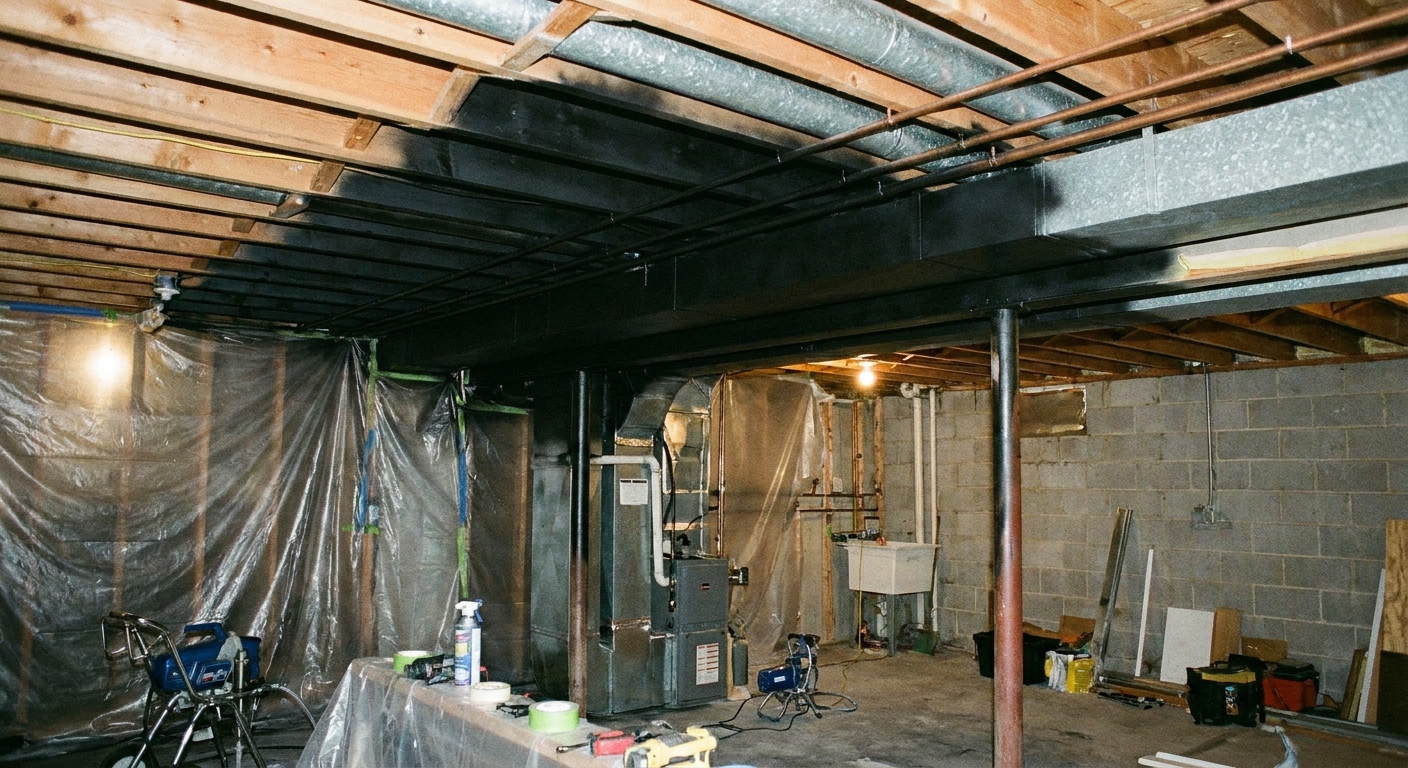
Painted exposed ceilings: choose your color carefully
Painting joists and mechanicals can be a great look, but if you paint it dark you lose brightness fast. If you want that open-ceiling style, a lighter color helps keep the basement from feeling like a cave. I walk through the pros and cons here: How to Paint an Exposed Basement Ceiling.
Daylight plus layered lighting
Even a well-optimized window well will not carry the whole basement. The best results come from daylight improvements plus layered lighting (ambient, task, and accent) so the space stays bright after sunset and on gray days. If you are working with low headroom, start with Lighting for Low Basement Ceilings, and for finish-level lighting ideas, see Lighting Finishes.
Layout moves that borrow light
Sometimes the best “finish trick” is not a finish at all. It is choosing what gets placed where.
Put your most-used area in the daylight zone
Place the seating area, desk, or play space closer to the window wall and push storage, mechanical access, or media walls further away. Your eyes adjust to whatever your main viewpoint is. If your main viewpoint is brighter, the whole basement feels brighter.
Use openings to share daylight
If you are early in planning, consider a wider opening or half wall between the windowed room and the darker space. You do not need an open concept basement, but even a larger cased opening can help daylight leak into adjacent areas.
If you are still mapping your basement out, start with How to Design a Basement Floor Plan. It is much easier to plan in daylight than to decorate your way out of a dark layout later.
Quick checklist
- Clear debris and clean the well walls, cover, and glass.
- Trim landscaping so the well sees more sky.
- If it is an egress window, make sure covers and upgrades do not reduce access or operation.
- Brighten the window return and trim with semi-gloss or high-gloss paint.
- Use eggshell or satin wall paint near the window.
- Place one large mirror opposite or perpendicular to the window.
- Keep treatments minimal and avoid blocking the opening with furniture.
- Keep the ceiling light so daylight can spread.
FAQ
Do mirrors really make a basement brighter, or just look brighter?
They do both. A mirror cannot create more lumens, but it redirects the daylight you already have into parts of the room that were not getting it. That reduces harsh contrast and makes the space feel brighter and more open.
Should I paint the window well white?
Light colors generally help reflect more light into the window, but the best choice depends on the well material and what coatings are compatible outdoors. Prep is everything, and you do not want peeling paint dropping into the well. If the well is part of an egress route, avoid finishes that make surfaces slippery.
Is glossy wall paint a good idea in basements?
Usually not for full walls. High-gloss shows drywall flaws and can look shiny in a weird way under mixed lighting. I prefer satin or eggshell on walls, then go glossier on trim and the window return where reflectivity helps and imperfections are less noticeable.
What if I only have one egress window and the rest of the basement is dark?
Lean on layout and light-sharing moves: glass doors where appropriate, wider openings, lighter finishes near the window, and mirrors that throw light toward the darker zones. Then make sure your artificial lighting plan carries the rest of the load. If you are working with low ceilings, I also recommend reading Lighting for Low Basement Ceilings.