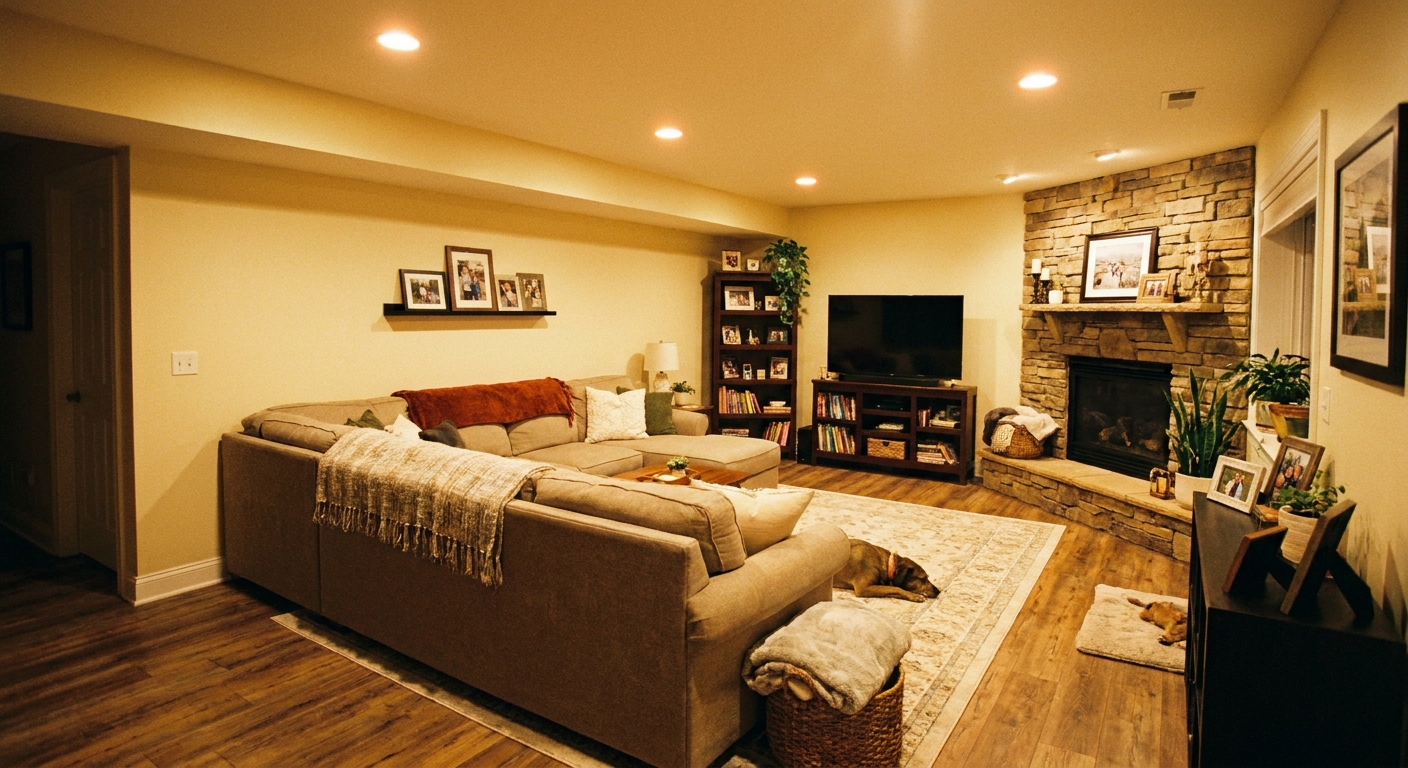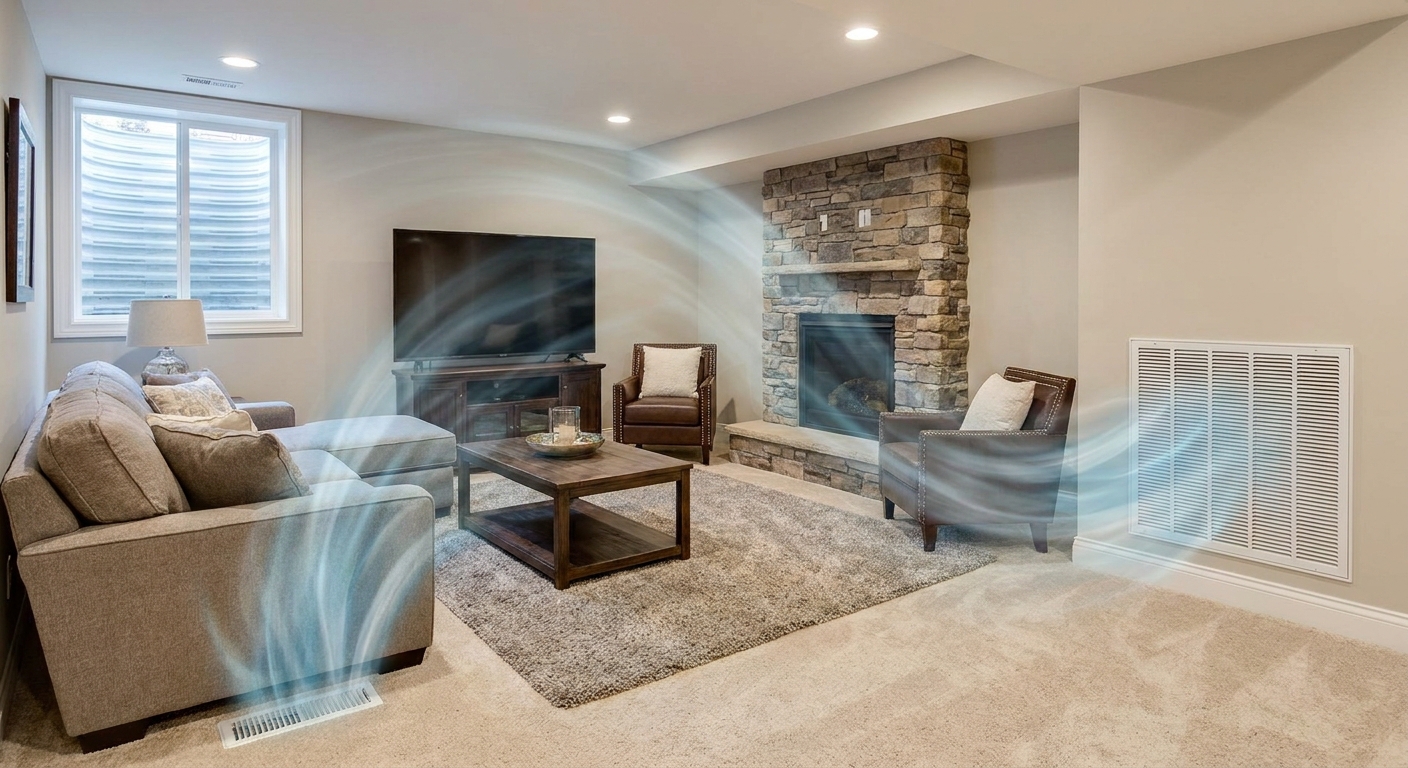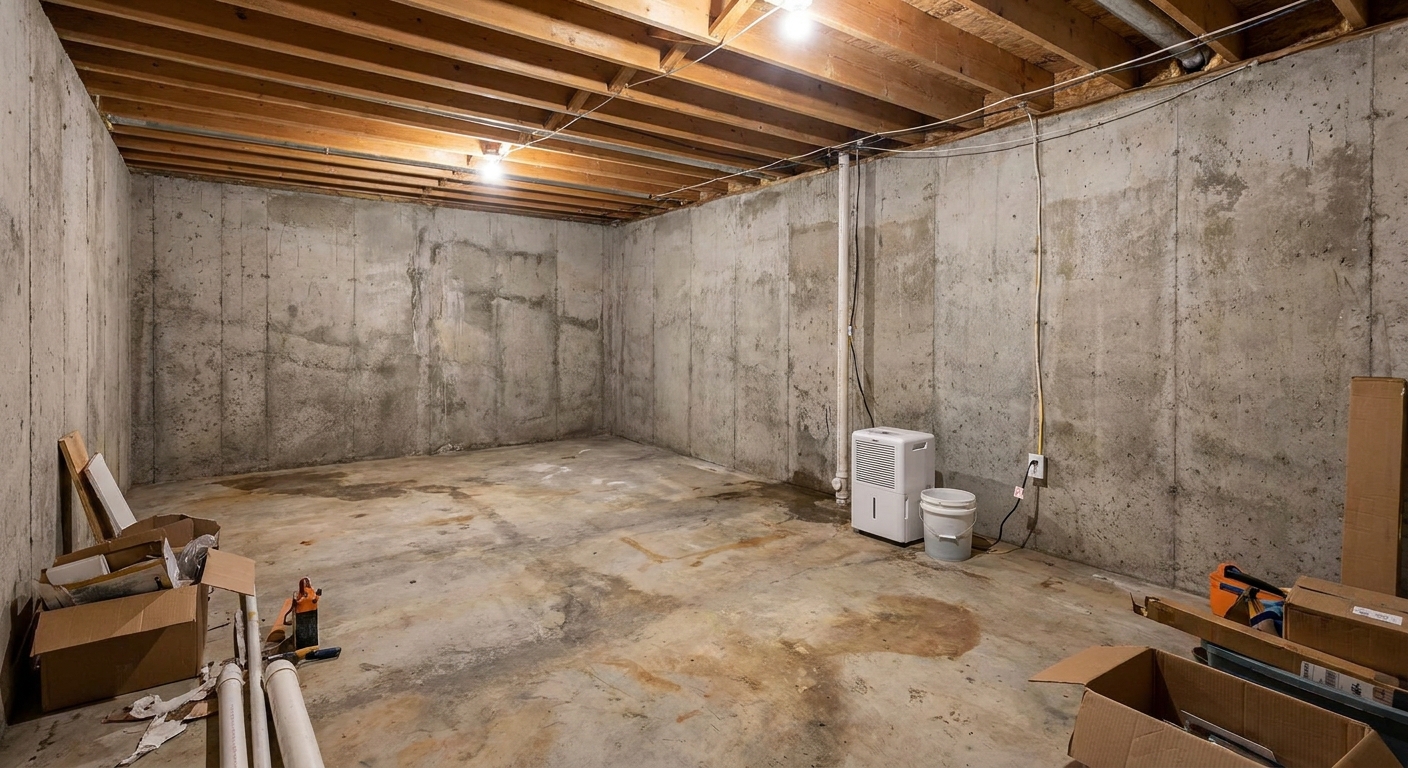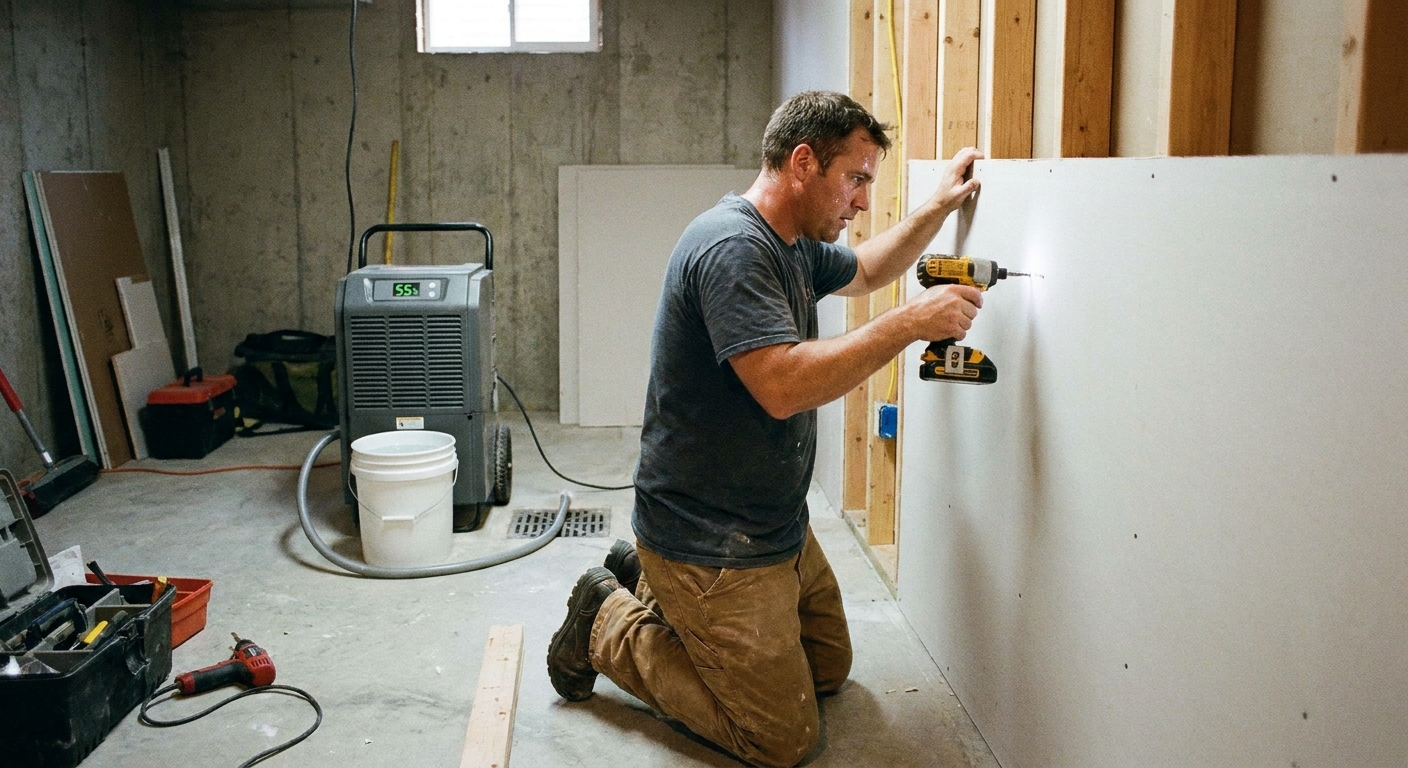

The first basement I ever finished had zero windows and plenty of “natural character” in the form of concrete, low ceilings, and that familiar slightly-musty darkness. My first paint choice looked great on a tiny chip upstairs. Downstairs, it turned into a dull, grayish cave. That lesson stuck with me: in a windowless basement, paint color is not decoration. It is lighting equipment.
This article will walk you through how to pick colors that bounce artificial light around, keep walls feeling clean and open, and avoid the common undertone traps that make basements look colder, smaller, and darker than they need to.
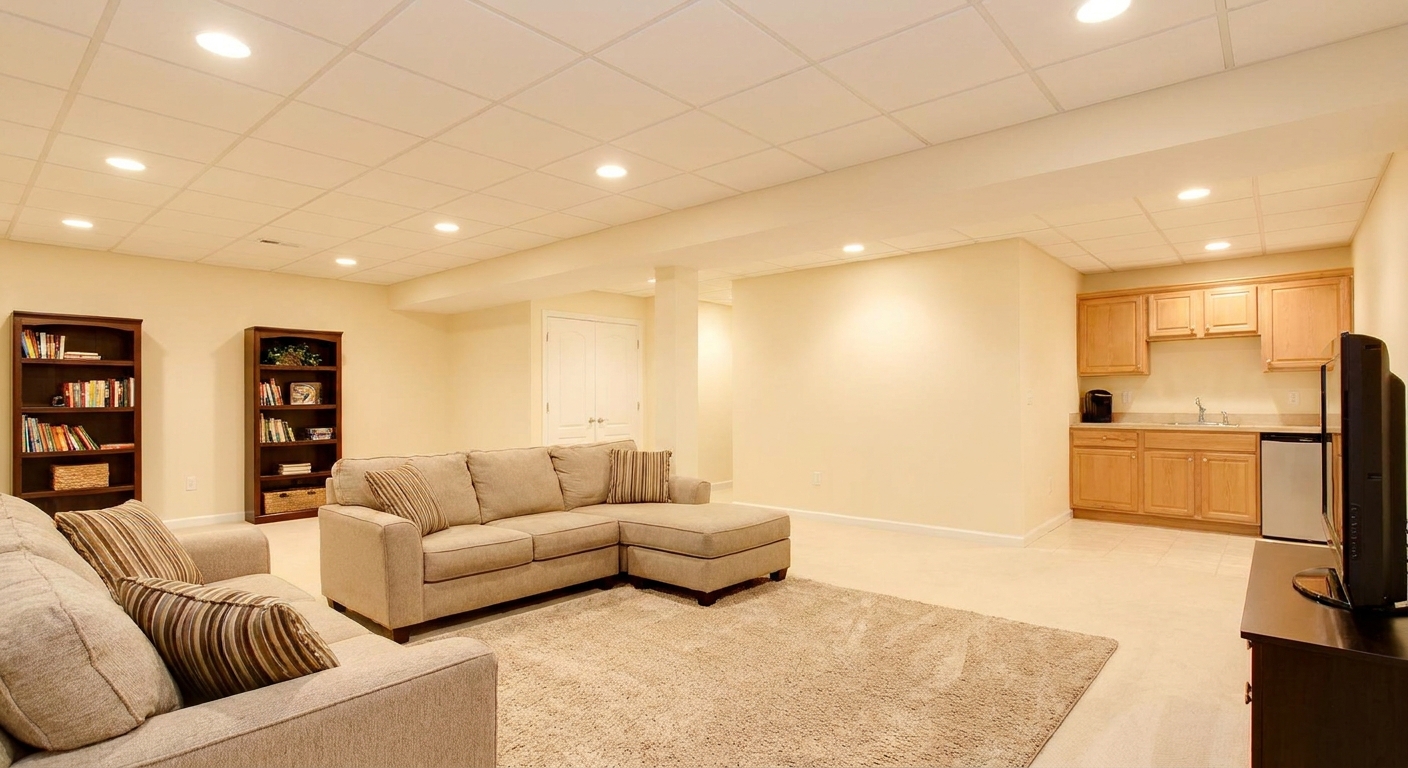
Start with moisture and lighting reality
Before you chase the “brightest white,” make sure the basement is actually ready to behave like a living space. Paint can make a room feel brighter, but it cannot solve damp air, musty odors, or poor lighting layout.
- Control humidity first. If the space runs humid, paint can spot, peel, or grow mildew. Dial in moisture control before finishing work. If you need help with the basics, start at Moisture Control and consider a properly sized unit using basement dehumidifier sizing and system options.
- Pick your light bulbs before final paint. “Warm white” and “daylight” bulbs can make the same paint look totally different. If you are changing fixtures, LEDs, or color temperature, do that first or at least commit to a bulb plan.
- Remember basements are reflective-poor. Dark floors, dark ceilings, and lots of fabric soak up light. Paint has to work harder downstairs than it does upstairs.
LRV: the number that matters in a windowless basement
LRV stands for Light Reflectance Value. It is a measurement of how much visible light a color reflects on a scale from 0 (absorbs nearly all light, think black) to 100 (reflects most light, roughly a bright white standard).
In a windowless basement, higher LRV colors usually make the room feel brighter because they return more of your lamp and fixture light back into the space. That said, “highest LRV” is not always the best look. Very bright whites can feel stark under some LEDs, and they can highlight every drywall wave and seam if your lighting hits at a low angle.
Practical LRV targets
- Walls: Aim for roughly LRV 70 to 85 for most windowless basements that need help feeling open.
- Ceilings: Often LRV 85 to 95, especially with low ceilings. A brighter ceiling helps the whole room feel taller.
- Trim and doors: Usually LRV 80+ if you want crisp separation, but do not be afraid to soften contrast if the room feels choppy.
If you are shopping paint, most major brands publish LRV on their websites and sometimes on the back of the swatch strip. Use it as a guardrail, then let undertone and finish make the final call.
Undertones: why “white” turns weird downstairs
Basements tend to exaggerate undertones because you are relying on artificial light and bounced light. Concrete, gray LVP, exposed ductwork, and cool LED bulbs can all pull paint toward blue, green, or purple in a hurry.
Common basement undertone problems
- Cool whites going icy. A crisp white can read sterile or bluish under 4000K to 5000K lighting, especially next to gray floors.
- Warm whites going yellow or dingy. In very warm (2700K) lighting, some off-whites can look nicotine-yellow, even when they are not.
- Greige turning flat. Many popular greiges rely on natural daylight to look balanced. In a windowless room, they can fall into a muddy gray.
Basement-friendly undertone directions
These are not hard rules, but they are reliable starting points:
- Soft warm whites (subtle cream or beige undertone) tend to feel welcoming in a basement and hide minor wall imperfections.
- Balanced off-whites (neither strongly warm nor strongly cool) are safest if you are mixing lighting types in adjacent rooms.
- Very light taupes can be great if you want warmth without reading “yellow.”
- Very pale blue-grays can work if your basement runs hot and you want cooling energy, but keep LRV high and test carefully.
Pick sheen like a basement finisher, not a living room decorator
Sheen affects both perceived brightness and how much surface flaws show. More sheen generally reflects more light, but it also highlights drywall seams, patches, and roller texture. Basements often have lots of raking light from cans, wall sconces, and stair lighting, so this matters.
My default sheen plan for windowless basements
- Ceiling: Flat ceiling paint. It hides imperfections and reduces glare from recessed lights.
- Walls: Eggshell or matte for most spaces. If you have kids, dogs, or a high-traffic rec room, step up to satin, but only if your walls are pretty smooth.
- Trim and doors: Satin or semi-gloss for durability and wipeability. Trim sheen also helps bounce light around the perimeter.
A note on “washable matte”
Many brands now sell washable matte finishes. In basements, that can be a sweet spot: low glare, fewer visible wall defects, and still easy to clean. Just remember that prep matters more than the label. Primer and sanding win every time.
Color strategies that actually brighten a windowless basement
1) Go light, but not blinding
Ultra-white walls can feel harsh underground. I usually recommend a soft off-white or a near-white for walls, paired with a brighter white ceiling. That small contrast keeps the space crisp without making it feel like a garage.
2) Use a “bright ceiling” to make low ceilings feel higher
Basement ceilings are often the limiting factor, especially if you are working around ductwork or soffits. A bright, flat ceiling helps the room read taller, particularly when paired with even lighting. If you are still planning around obstacles, see basement plumbing and HVAC without losing ceiling height and how to frame soffits and bulkheads.
3) Keep contrast low to make the footprint feel larger
In a windowless basement, heavy contrast breaks the room into chunks. If you want it to feel bigger, keep the wall, trim, and ceiling in the same family. That does not mean everything must match. It means avoid hard jumps from very dark to very bright unless you are using that contrast intentionally.
4) Coordinate paint with the floor, not against it
Flooring is a huge percentage of what your eyes see. If you have dark flooring, you need higher LRV walls to compensate. If you have mid-tone gray floors, be cautious with cool wall colors that amplify the gray and make the room feel colder. If you are still deciding floors, start with Flooring Options or compare popular choices in Luxury Vinyl Plank vs. Laminate for Basements.
Simple “no regrets” palette ideas
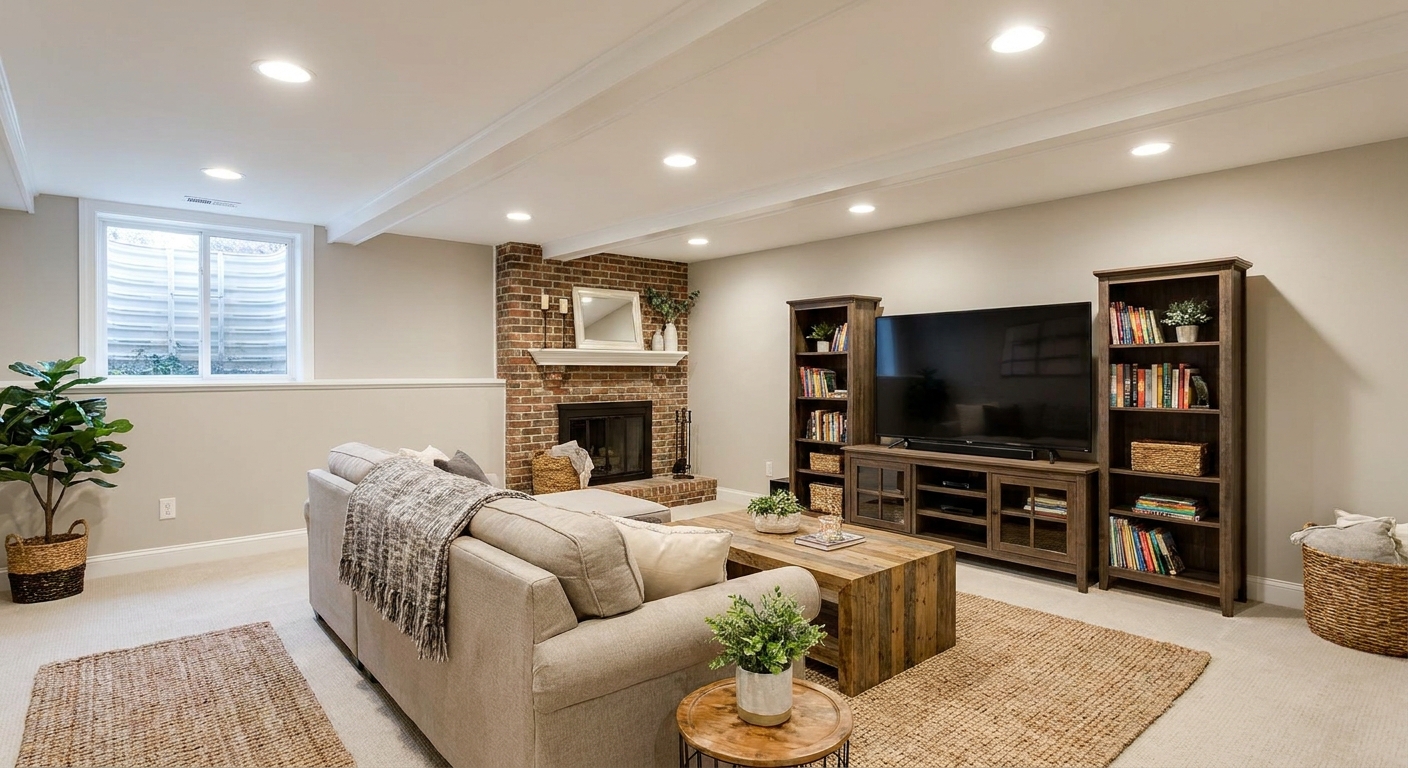
I am not going to pretend one paint color fits every basement. But these palette approaches are consistently successful in windowless spaces because they use high LRV, controlled undertones, and reasonable contrast.
Palette A: Clean and warm
- Walls: high LRV warm off-white
- Ceiling: brighter white in flat
- Trim: matching or slightly brighter white in satin
- Best for: family rooms, playrooms, guest suites
Palette B: Soft greige that does not go muddy
- Walls: very light greige with LRV in the 70s
- Ceiling: bright white flat
- Trim: clean white satin
- Best for: open basements where you want a little warmth but not “cream”
Palette C: Light neutral with one deeper accent
- Main walls: near-white or light neutral
- Accent wall: mid-tone color (not super dark) to add depth without sucking up all the light
- Ceiling: bright flat
- Best for: media rooms, gym areas, home offices that feel too blank
If you do an accent wall in a windowless basement, place it where the lighting is strongest and where you can avoid shadows from bulky furniture. A dark accent wall behind a sectional in a dim corner almost always reads like a cave opening.
How to test paint in a basement (the method that saves you money)
Paint samples are cheap. Repainting a basement is not. Here is the test process I use now, after learning the hard way.
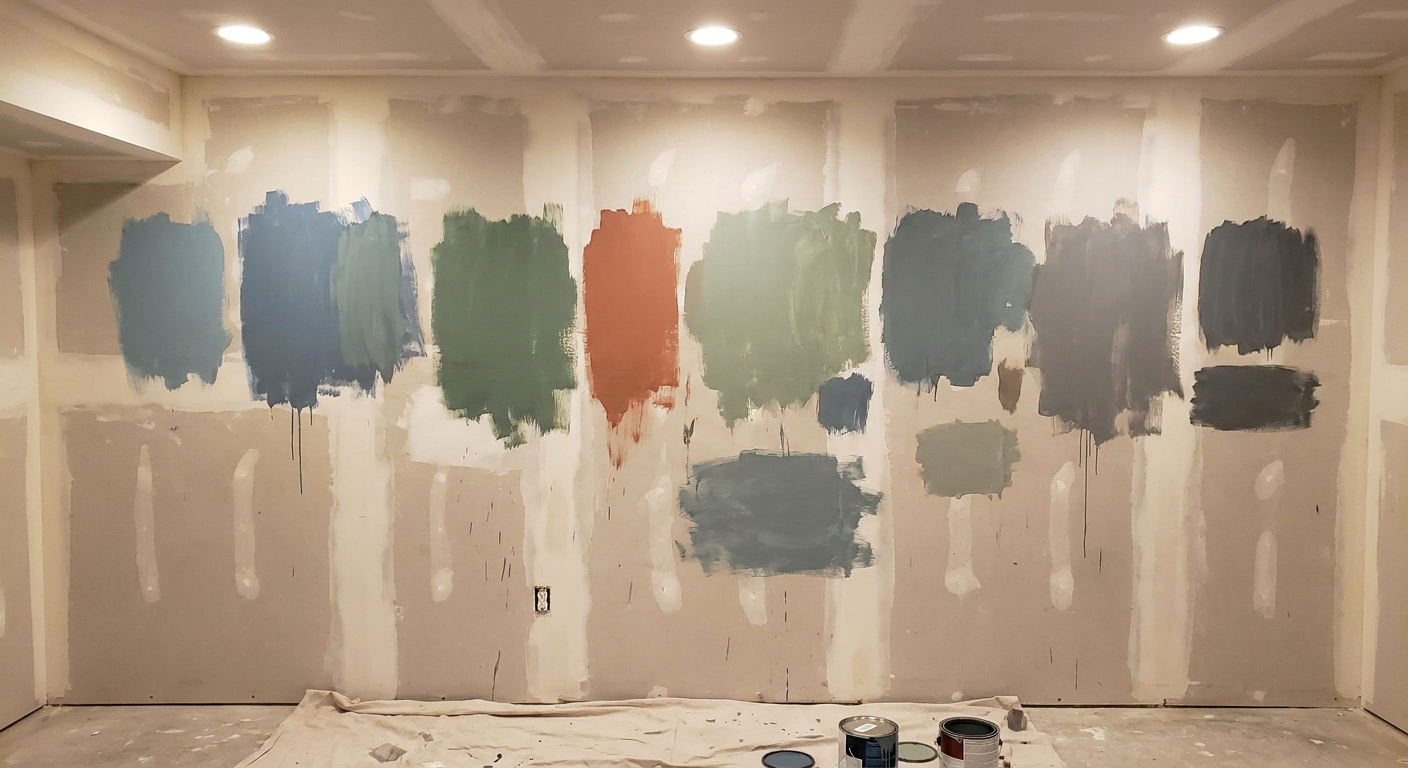
- Buy sample jars in 3 to 5 contenders, all in the same general LRV range.
- Paint large samples, not tiny squares. Aim for at least 18 inches by 18 inches, two coats.
- Test on multiple walls if the room has different light zones. One sample near the stairs, one in the deepest corner.
- View under your actual bulbs at three times: daytime, evening, and late night. Windowless basements still change because the rest of the home lighting changes.
- Look next to your fixed finishes: flooring, couch, area rug, cabinets, and trim color.
- Decide after 48 hours. If you are still unsure, that is your answer. Go more neutral.
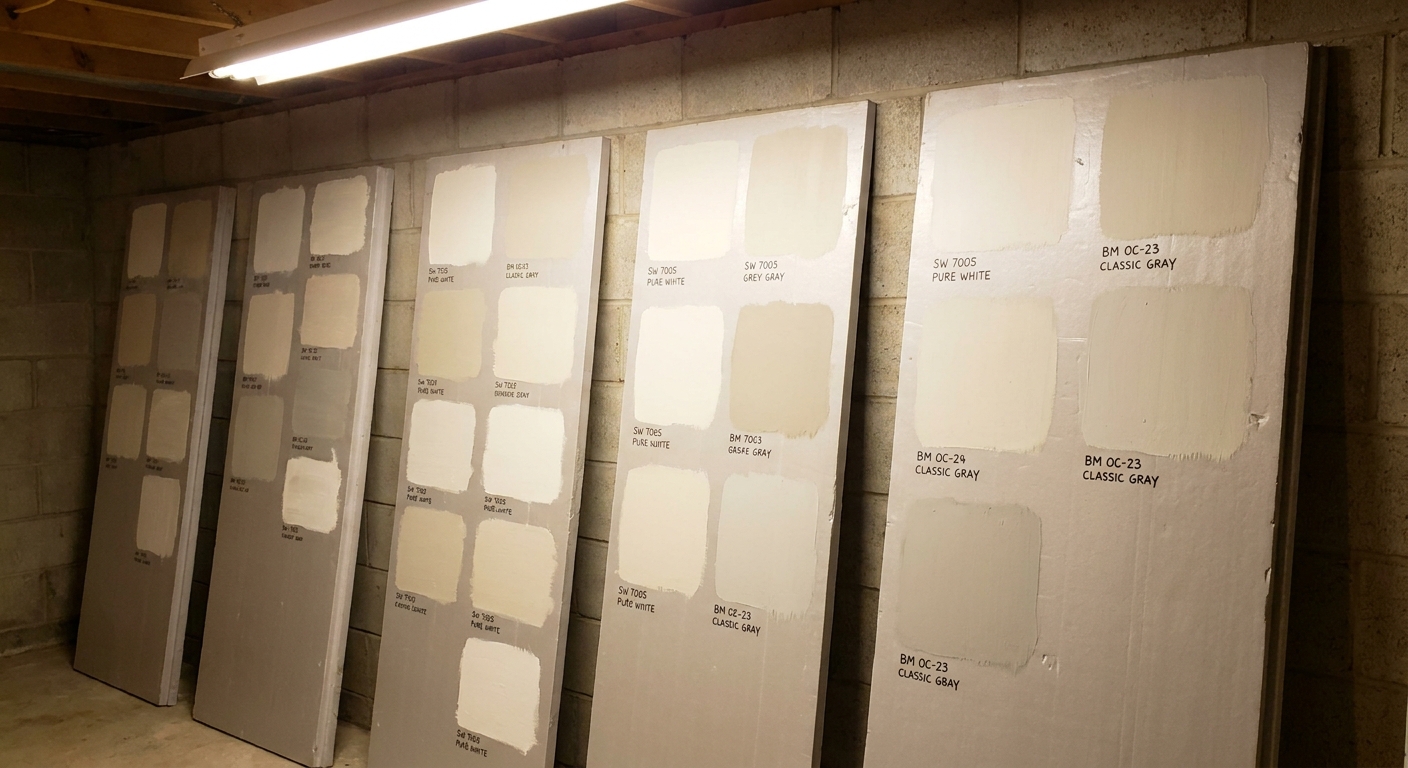
One more trick: paint your samples on foam board and lean them against the wall. You can move them around, and you do not end up with ten random rectangles telegraphing through your final coat.
Basement-specific pitfalls to avoid
Choosing a color that only works in daylight
Many trendy neutrals are designed to look “alive” in sunlit rooms. In a basement, they can turn lifeless. Stick with colors that look good under artificial light first.
Going too dark to feel “cozy”
Cozy is about layers, not darkness. In a windowless basement, very dark paint often makes the room feel smaller and can emphasize low ceilings. If you want cozy, keep the walls light and bring in warmth with rugs, wood tones, and warmer bulbs.
Picking sheen for brightness instead of surface quality
Glossy paint reflects light, but it also reflects every drywall flaw. If your walls are not perfect, higher sheen can make the space feel busier and less finished, even if it is technically brighter.
Ignoring the ceiling and stairwell transition
The stairwell is your first impression. If the basement is bright but the stairwell is dark, it still feels like you are walking into a cave. Carry your wall color or a lighter version into the stair area when possible, and make sure lighting is continuous.
Quick FAQ
What is the best paint color to brighten a windowless basement?
Look for a high LRV neutral with a soft, controlled undertone. In most homes, that means an off-white or near-white rather than a stark, pure white.
Should I paint the basement ceiling white?
Usually, yes. A bright, flat white ceiling is one of the simplest ways to make a basement feel taller and more open. If you have an exposed ceiling painted dark for an industrial look, you are trading brightness for style, which is fine if you plan lighting accordingly.
Is satin paint too shiny for a basement?
Not automatically. Satin is durable and wipeable, which is great downstairs. The issue is wall quality and lighting angles. If your basement walls have visible seams or patches, eggshell or matte often looks better.
Do lighter colors show moisture problems more?
They can make stains more visible, yes. That is a feature, not a bug. If moisture is present, you want to know about it and fix it before it becomes mold or rot. If you suspect slab moisture, start with testing a basement slab for moisture emissions.
The short version (if you are standing in the paint aisle)
- Target LRV 70 to 85 for most windowless basement walls.
- Use a brighter flat ceiling to lift the whole room.
- Choose soft undertones over stark whites or complex greiges.
- Use eggshell or matte on walls unless you need extra scrub resistance.
- Test big samples under your actual LEDs before committing.
If you get the moisture right and treat paint like part of your lighting plan, a windowless basement can feel surprisingly airy. Mine did, eventually. It just took one repaint and a little humility.