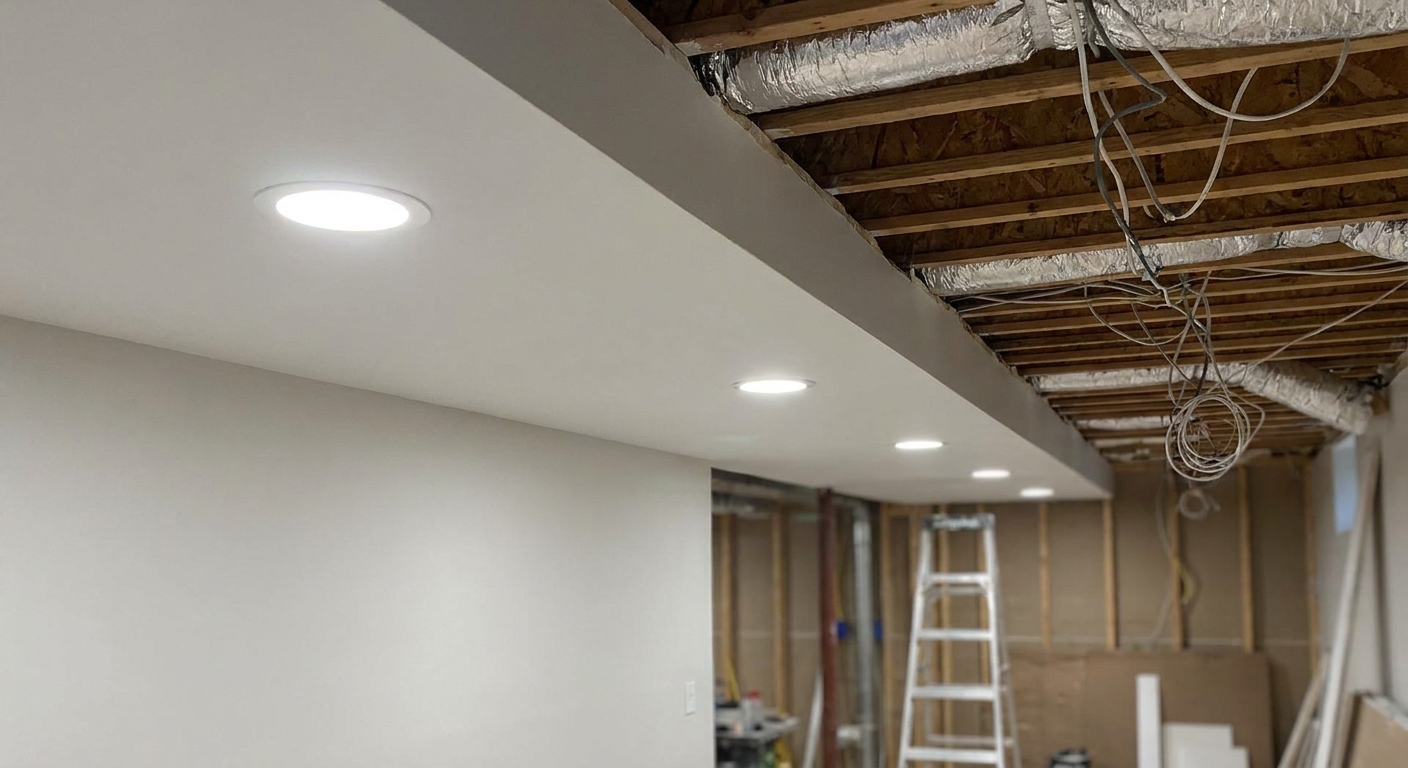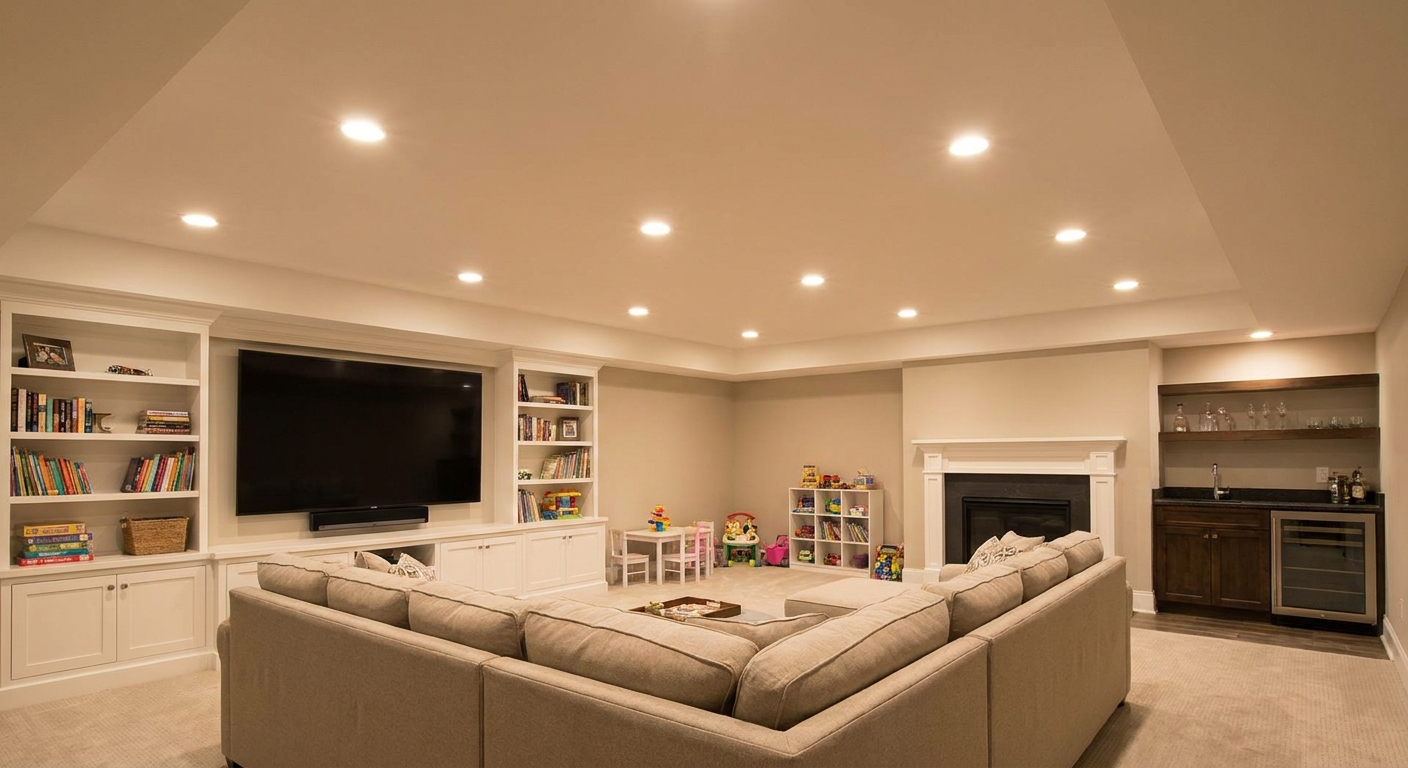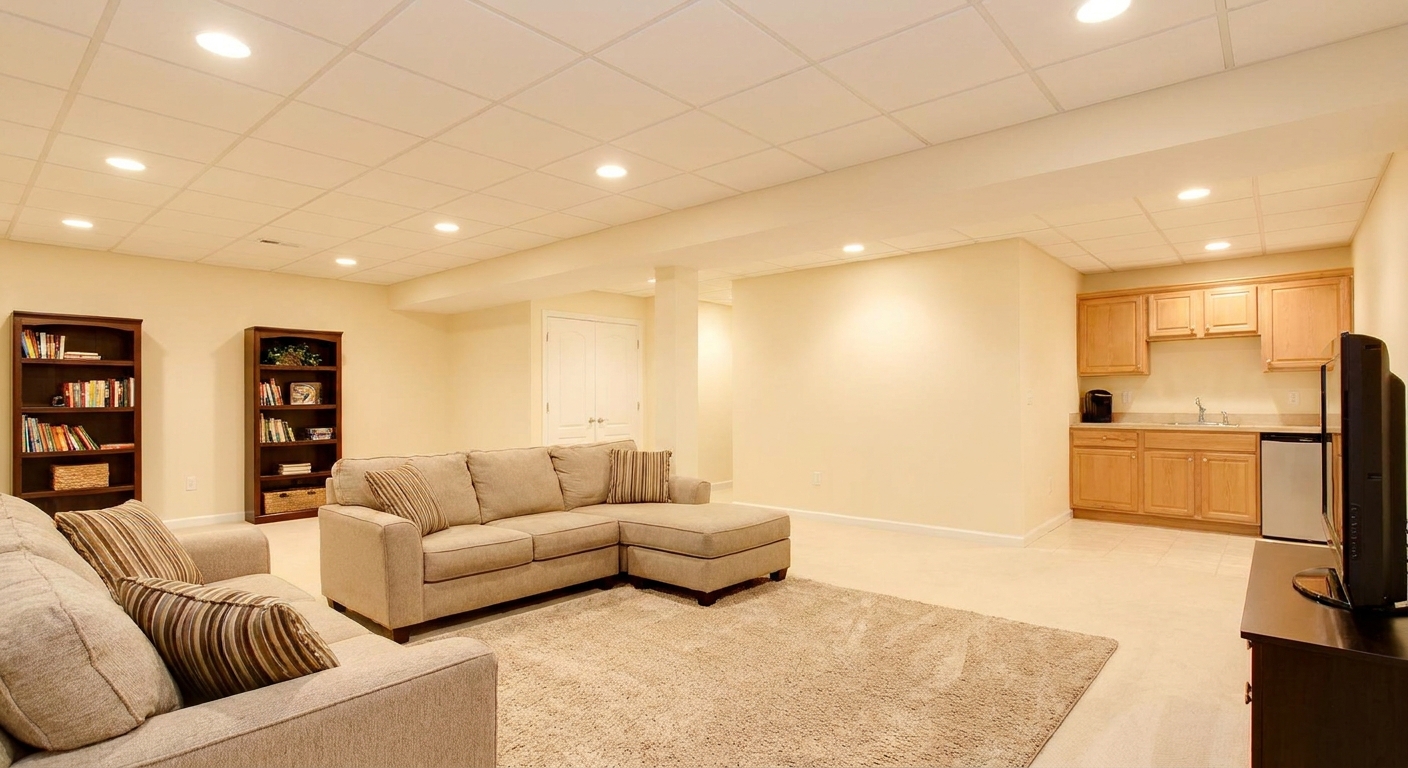

When I finished my first basement, I obsessed over the big stuff: keeping water out, framing straight walls against a wavy foundation, and squeezing ducts into soffits without losing all my headroom. Then I installed a bunch of “bright white” LEDs and instantly hated how the space felt. The paint looked different at night, the bathroom mirror lighting was harsh, and my so-called cozy TV corner felt like a break room.
That is when I learned the sneaky truth about basement lighting: color temperature matters as much as brightness. If a basement feels harsh, the fix is not always “dim it.” Sometimes you need a different Kelvin range, better color quality, or simply more fixtures spread out instead of one overly intense light source.
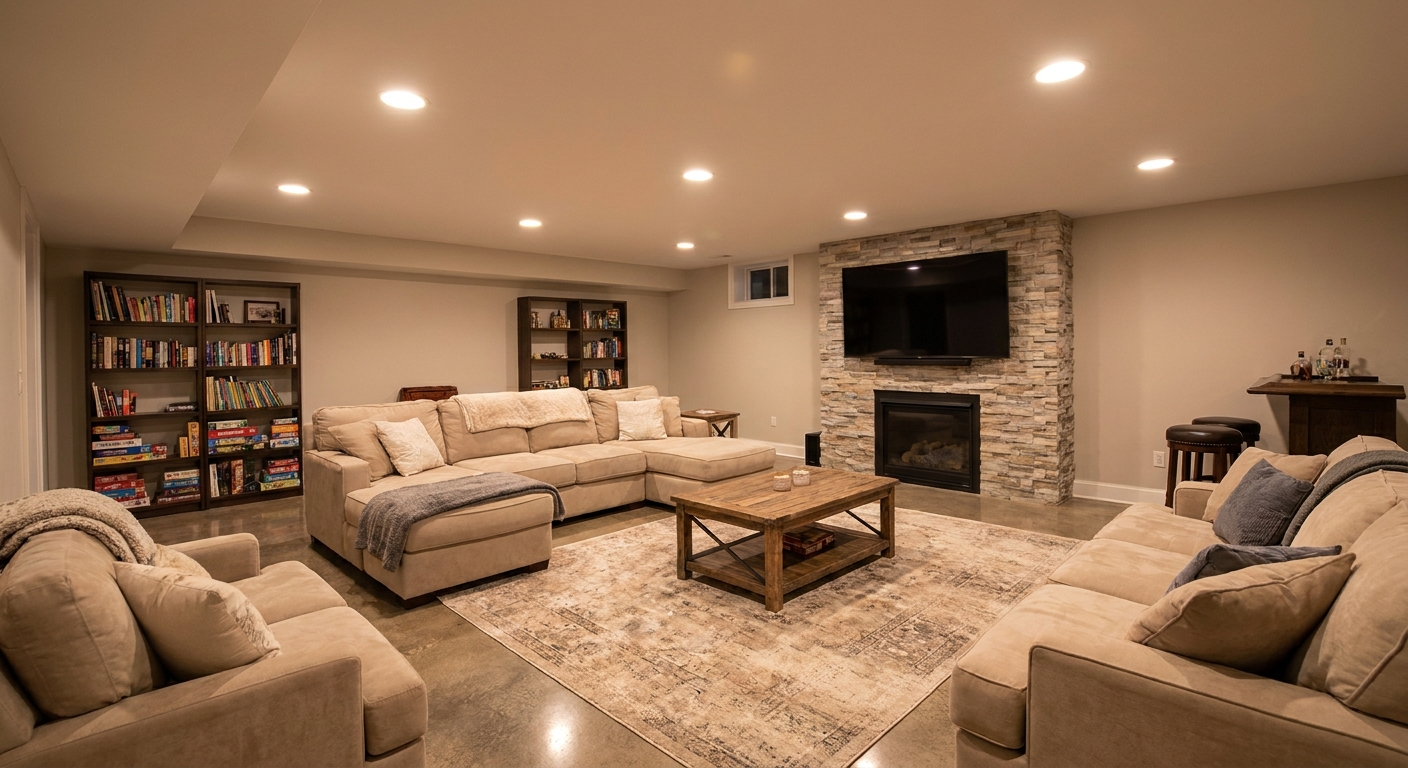
Kelvin in plain English
Kelvin (K) is the color appearance of light, not how bright it is. Brightness is measured in lumens.
- 2700K to 3000K: warm white. Yellowish, cozy, forgiving. Similar to traditional incandescent.
- 3500K: warm-neutral. Many brands label this “neutral white,” but the idea is the same: less yellow than 3000K, not icy like 5000K.
- 4000K: neutral white. Clean and crisp without feeling blue in most spaces.
- 5000K (occasionally 6500K): daylight. Very cool and can feel clinical, but it can work in task-heavy areas if that is the look you want.
Basements tend to have fewer windows and less natural light, so the Kelvin choice is more noticeable than upstairs. A color temperature that feels fine in a sunny kitchen can feel icy in a windowless basement.
The quick pick chart
If you just want a fast answer, start here.
- Home theater: 2700K (sometimes 3000K for accent lighting)
- Living room or family room: 2700K to 3000K
- Bedroom or guest suite: 2700K to 3000K
- Bathroom: 3000K to 4000K (depends on vanity lighting and finishes)
- Gym: 4000K to 5000K
- Laundry or workshop: 4000K to 5000K
- Hallways and stairs: match the adjacent spaces, usually 3000K
From there, fine tune based on your wall colors, flooring, and what you do in the room.
Room by room
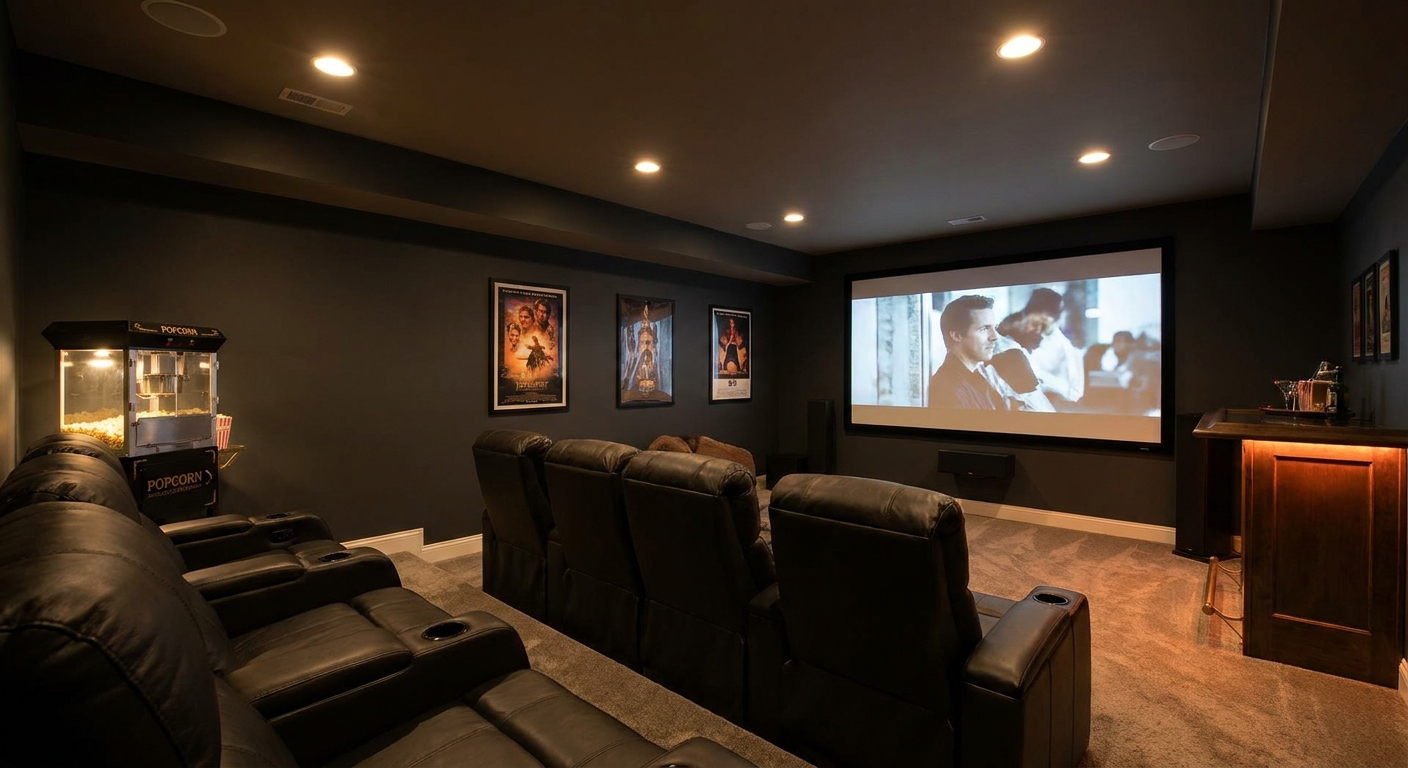
Home theater
A theater is about comfort and contrast. Cooler light makes the room feel brighter, which is the opposite of what you want when a screen is the main event.
- Best Kelvin range: 2700K for recessed cans, sconces, and cove lighting.
- When 3000K works: if your theater doubles as a hangout space and you want it slightly less amber.
- Avoid: 4000K and up in the main viewing area. It tends to look harsh on dark paint colors and can make faces look washed out during pre-movie chatting.
Basement specific tip: use dimmable fixtures and set scenes. I like having “cleaning mode” (brighter) and “movie mode” (low). If you are planning recessed lights, my layout advice here helps keep the light even and glare under control: Recessed Lighting Layout for Basements.
Gym
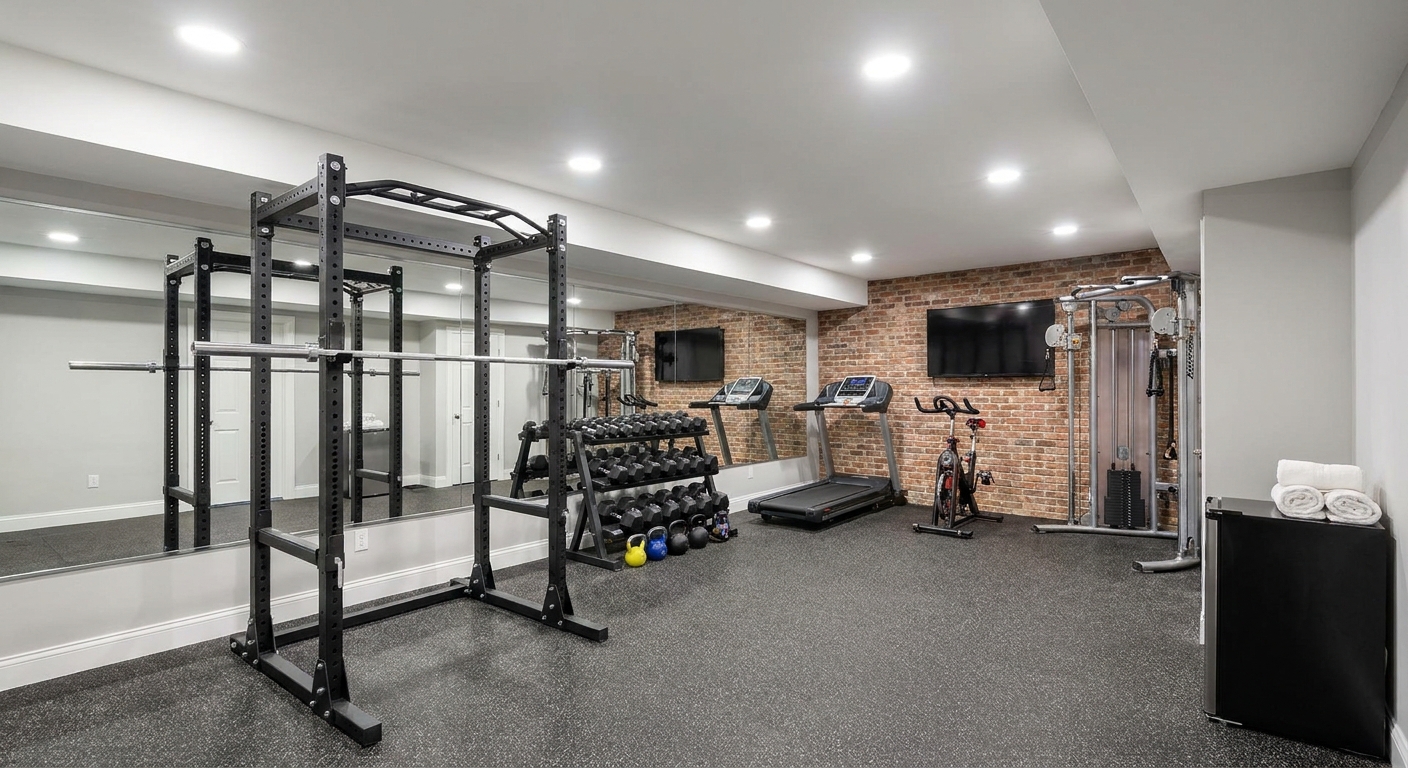
Gyms are task spaces. You want alert, energetic light that makes it easy to see form, read a screen, and not feel like you are working out in a cave.
- Best Kelvin range: 4000K for most home gyms.
- Go up to 5000K: if the space has no windows and you like a very crisp feel, or if it is also a workshop style space.
- Skip 2700K: it can feel sleepy and dim, even at the same lumen output.
Basement specific tip: if your gym floor is dark rubber, the room will absorb light. You may need more fixtures or higher output, not cooler Kelvin. If you are planning rubber flooring, this pairs well with lighting decisions: Interlocking Rubber Gym Flooring for Basements.
Bathroom
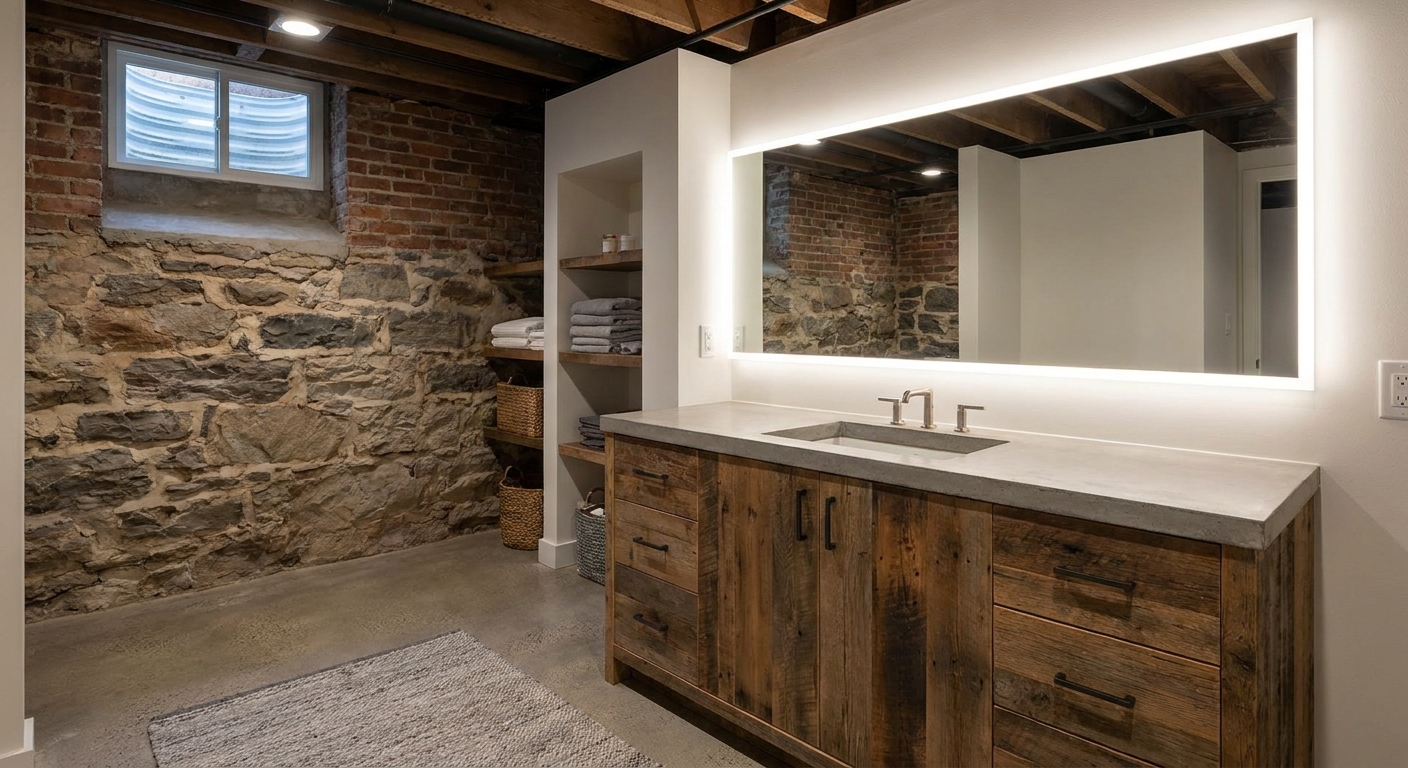
Bathrooms are the trickiest because you need flattering light and accurate color for shaving, makeup, and checking skin tone. In a basement, you also have to deal with lower ceilings and sometimes no windows.
- Best Kelvin range: 3000K to 3500K for most basement bathrooms.
- When 4000K works: if you have very white tile, cool gray finishes, or you want a cleaner, spa-like look.
- What I avoid: mixing a 2700K ceiling light with 5000K vanity bulbs. That creates weird shadows and your mirror never matches the rest of the room.
Basement specific tip: focus on vanity lighting first. The mirror area needs even, face level light. If the vanity is right, you can keep the ceiling fixture slightly warmer without regret.
Living and hangout areas
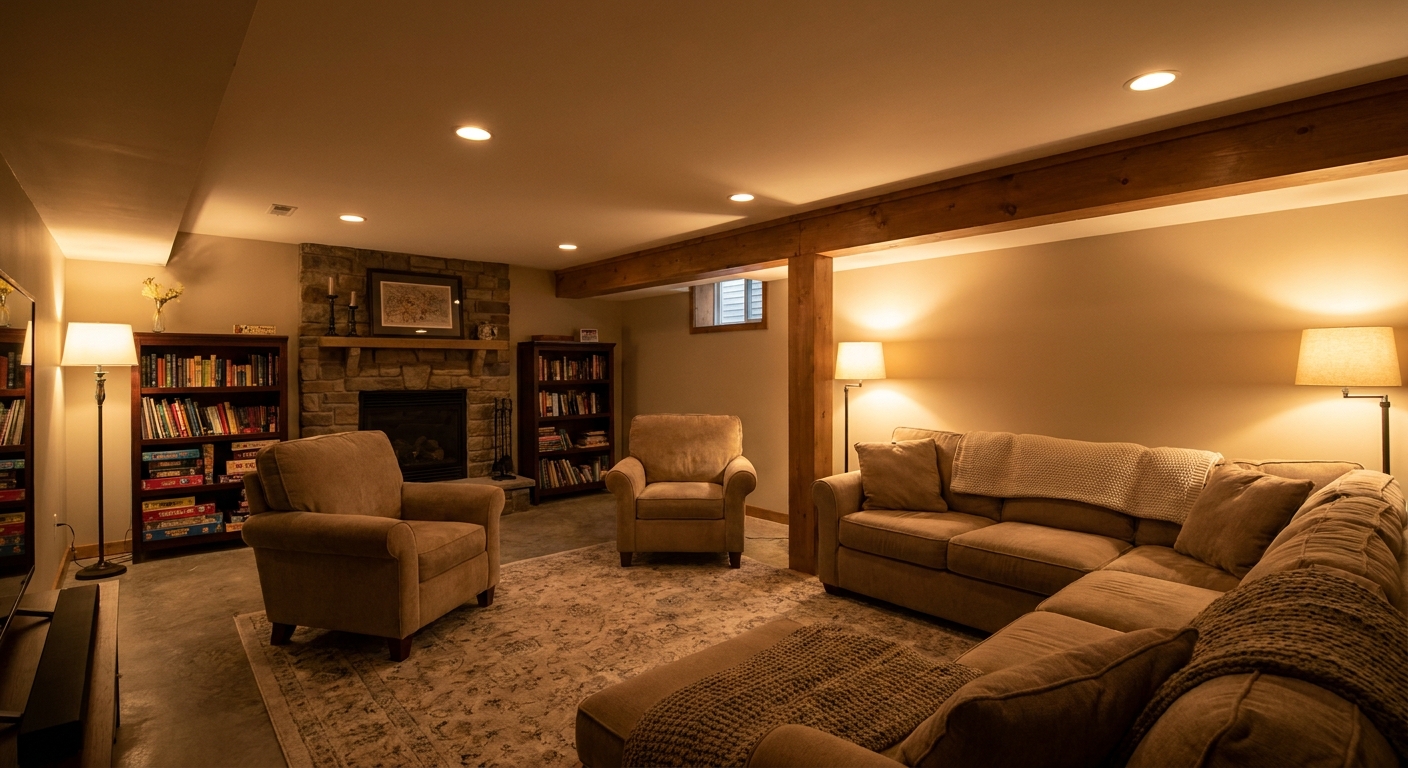
This is where basements win. Movie nights, board games, guest overflow, and a place to relax that is not right next to the kitchen mess.
- Best Kelvin range: 2700K to 3000K.
- When 3500K fits: if the space is very open and you want it to feel a bit brighter and more modern, especially with lighter floors and white trim.
Basement specific tip: if your basement has low ceilings, warmth helps the space feel less stark. I wrote more about lighting choices that work when headroom is limited here: Lighting for Low Basement Ceilings.
Office or study nook
For computer work and reading, neutral light reduces eye strain, but too cool can feel sterile if you work down there for hours.
- Best Kelvin range: 3500K to 4000K.
- Warm it up: if your office is part of a larger family room that is 2700K to 3000K, consider matching the main space and adding a task lamp at 3500K to 4000K.
Hallways, stairs, and utility zones
These areas feel best when they do not announce themselves. The goal is safe, even light that matches nearby rooms.
- Best Kelvin range: usually 3000K.
- Match adjacent rooms: if a hallway connects a 2700K theater to a 4000K gym, pick 3000K as the peacemaker.
How bright is bright enough
People get tempted to “fix” a dim basement by going cooler (jumping from 3000K to 5000K). I prefer the opposite approach: stay in the Kelvin range you like, then add lumens the right way.
- Use more sources, not one hot spot: more recessed lights at lower output usually feels better than fewer lights blasting down.
- Think in layers: ceiling ambient light, a couple of lamps, and dedicated task light where you need it (desk, vanity, workout area).
- Quick lumen reality check: most finished basements land somewhere around 10 to 20 lumens per square foot for general ambient light, with task zones higher. Dark ceilings and floors push you toward the higher end.
If the ceiling is low, spreading the light out matters even more because glare builds fast.
Do not ignore CRI
Kelvin sets the vibe. CRI affects how true colors look under that light. This matters a lot in basements because you are often trying to make a windowless space feel natural.
- Good: CRI 90+ (especially for bathrooms, living areas, and anywhere you care about paint and skin tone).
- Acceptable: CRI 80+ (fine for hallways, storage, some gyms).
CRI is not the whole story of why paint and finishes look different at night, but it is a helpful baseline. Cheap LEDs can make colors look off even if the Kelvin rating is “right.”
Dimmers and flicker
In basements, I am a huge fan of dimming because one space often has to do multiple jobs. But not all LEDs dim well, and some create flicker that you only notice when you are trying to relax.
- Use LED rated dimmers and check that the bulb or fixture is labeled dimmable.
- Buy all the same model for a zone. Mixing brands is where you get inconsistent dimming and color shift.
- Know what “warm-dim” means: some LEDs are designed to get warmer as they dim (great for theaters and living spaces). Standard LEDs may not warm much at all, and some shift slightly green or pink when dimmed.
If you are planning a full remodel, it helps to think lighting through while you are planning the ceiling finish. A drop ceiling versus drywall can change your fixture options and how easy it is to tweak lighting later: Drop Ceiling vs Drywall.
Glare in low ceilings
One of the most common basement mistakes right now is using super thin canless wafer LEDs everywhere and then wondering why the room feels harsh. Low ceilings plus wide beam LEDs can put a lot of light straight into your eyes.
- If glare bothers you: look for fixtures with a deeper regressed lens, a baffle, or a more diffused lens.
- Placement helps: keep lights a bit off the walls and out of direct sight lines from the couch or bed when possible.
- Dimming helps: but it works best when the fixture is not glaring at full power in the first place.
Match light to finishes
Here is the part most of us learn by accident: your finishes can push a Kelvin choice warmer or cooler.
- Warm floors (brown LVP, walnut tones, beige carpet): 2700K to 3000K usually looks rich and inviting. 4000K can make warm floors look slightly dull or greenish depending on the product.
- Cool finishes (gray LVP, white tile, black hardware): 3000K to 4000K often looks clean. 2700K can make white tile look creamy, which might be fine if that is the vibe you want.
- White trim and doors: 3000K is a safe default. Very warm lighting can make whites look yellow, and very cool lighting can make them look bluish.
If your basement is short on windows, paint color becomes even more sensitive to lighting. If you are still picking colors, this can help you choose shades that hold up in low natural light: Paint Colors That Brighten a Windowless Basement.
Using multiple Kelvins
It is completely normal to use more than one color temperature in a basement. The trick is to do it on purpose.
- Keep open areas consistent: if your basement is mostly one big space, stick to one Kelvin across the main ceiling lights. Use lamps and accents for variety.
- Change Kelvin at doorways: theaters, bathrooms, and gyms can have their own Kelvin as long as the transition is clear.
- Use separate switches: even within one room, split recessed lights into zones so you can dim one side or leave an accent row on.
My default picks
If a friend calls me and says, “Nathan, I just want it to look good,” here is what I tell them to do:
- Choose 3000K for most general living spaces.
- Choose 2700K for any dedicated theater or cozy lounge corner.
- Choose 4000K for any gym, workshop, or laundry zone where you want crisp task light.
- Buy 90+ CRI for living areas and bathrooms if the budget allows.
It is not fancy. It is just consistent, comfortable, and hard to regret later.
FAQ
Is 5000K too bright for a basement?
5000K is not inherently brighter, but it looks brighter and cooler to most people. In a windowless basement, it can feel clinical. I reserve it for gyms, workshops, and utility areas, or for homeowners who specifically want that daylight look.
Should all my basement bulbs be the same Kelvin?
Not necessarily. Matching Kelvin within open connected spaces matters most. Separate rooms can have different color temperatures if the purpose is different, like a warm theater and a neutral gym.
Why do my “3000K” bulbs not match each other?
Manufacturers have tolerances, and LEDs can vary by model, lens, and driver. The easiest fix is to stick with the same product line and buy all bulbs for a room at the same time.
What about smart bulbs that change color temperature?
They can be great in a basement because you can shift from 2700K cozy evening light to 4000K task light without rewiring. Just make sure the fixtures are compatible and that you are not relying on a dimmer that fights the smart controls.