
The first time I walked barefoot onto my unfinished basement slab in winter, I understood why people give up on “using the basement” for half the year. Concrete does not care about your cozy plans. It just sits there, stealing heat.
Cork flooring gets pitched as a natural fix for that cold-floor problem, and it can be, if you treat it like a basement material and not a living-room material. Below grade is all about moisture, vapor drive (moisture moving up through concrete), and realistic expectations. Here’s what cork does well, where it struggles, and what I consider “non-negotiable” for installing it in a basement.
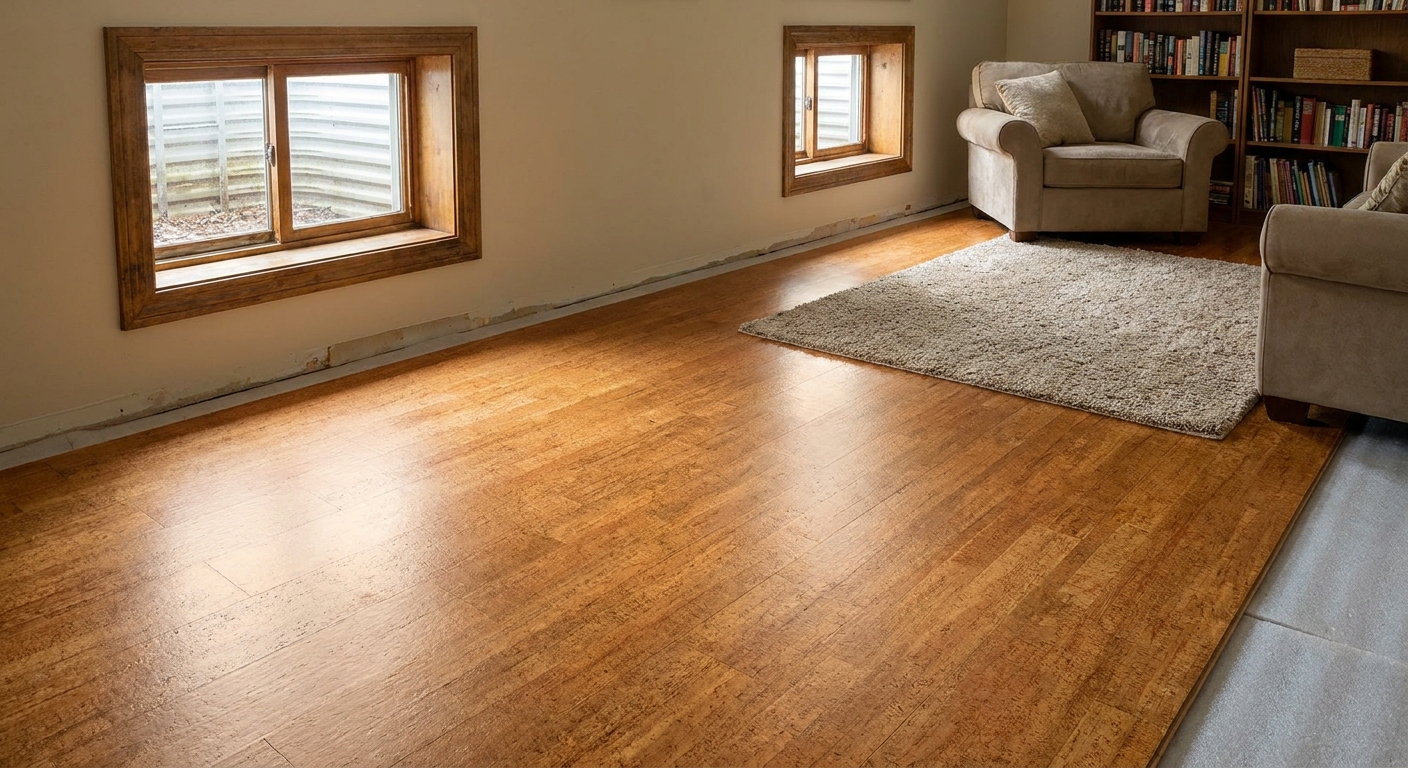
Why cork feels warmer
Cork’s big claim to fame is comfort. It has a cellular structure that traps air, which slows heat transfer. In plain English, it does not suck warmth out of your feet the way tile, vinyl on bare concrete, or a naked slab will.
Comfort vs insulation
Cork can improve surface comfort dramatically. That does not automatically mean it turns your basement into a high-performance insulated assembly. Your overall heat loss is still dominated by the slab and foundation walls. Think of cork as a comfort layer that reduces the “cold shock” feeling, not a substitute for a real subfloor and insulation strategy.
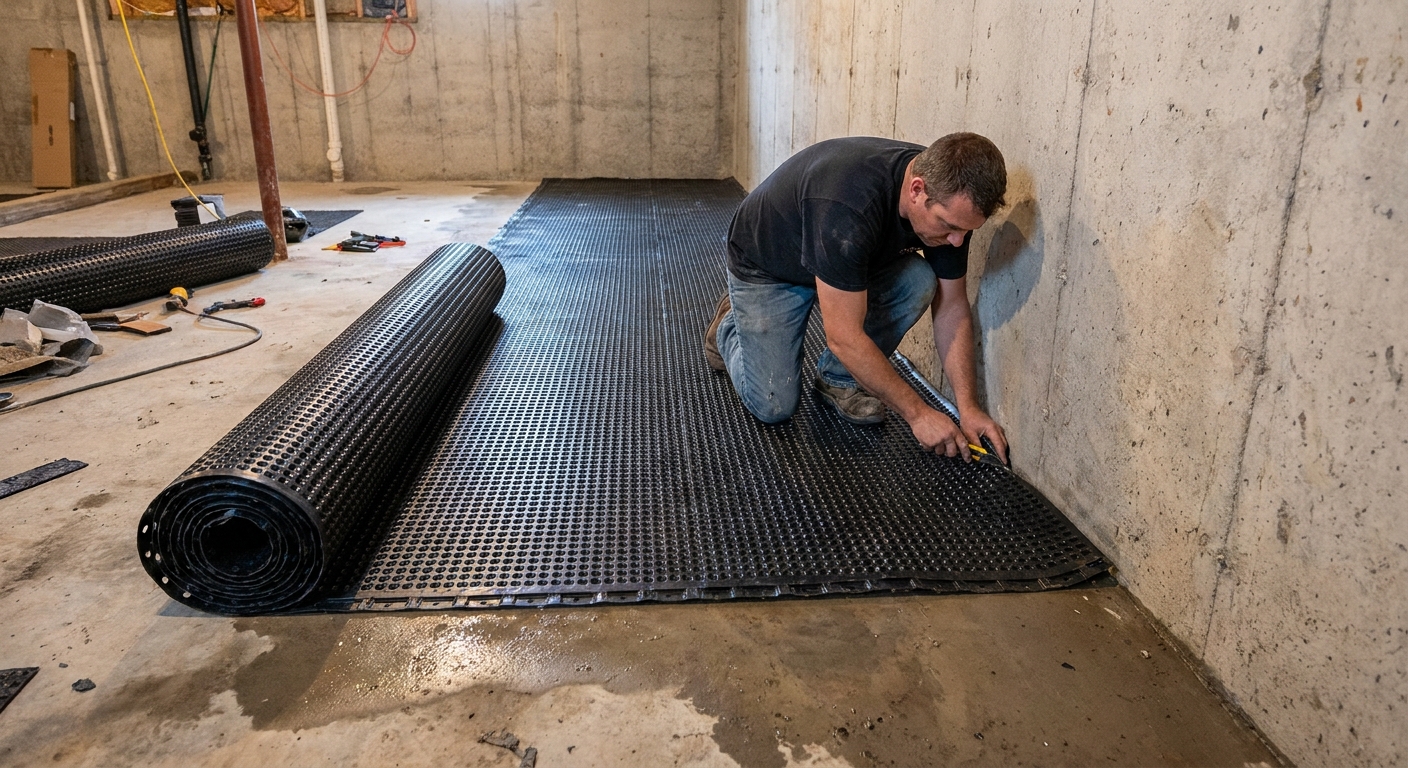
If your basement is consistently cold, pairing cork with a proper subfloor system is usually the better long game. I walk through the common options here: Basement subfloor systems: dimpled mats vs interlocking OSB panels.
Other perks that matter
- Sound softening: Cork is naturally quieter underfoot than many hard surfaces, which is helpful if you are trying to make a basement feel less “echoey.”
- Slight give underfoot: It is easier on knees and backs than concrete or ceramic tile.
- Warmer-to-the-touch surface: Even when the room air is cool, cork tends to feel less harsh than many resilient floors.
Where cork can go wrong
Cork is not automatically a bad basement choice, but it is less forgiving than the marketing makes it sound. Most cork failures I see or hear about trace back to one cause: moisture was treated as a “maybe” instead of a “when.”
Moisture and vapor are the threat
Basement slabs can look dry and still be emitting moisture vapor. Cork is organic, and while modern finishes help, prolonged moisture exposure can lead to swelling, edge lift, adhesive failure (for glue-down products), or a musty odor that is hard to reverse.
One detail people miss: many click-lock cork planks are not solid cork. They use a cork veneer over an HDF (fiberboard) core. That HDF core is often the first thing to swell at seams if vapor gets into the floor system. So the “cork” label does not automatically mean “basement safe.” If the manufacturer does not explicitly approve below-grade installation with a specific vapor system, I treat it as a no.
If you have any doubt, test first. This is one of those steps that feels optional until it is not: Test a basement slab for moisture emissions.
Flooding is a deal breaker
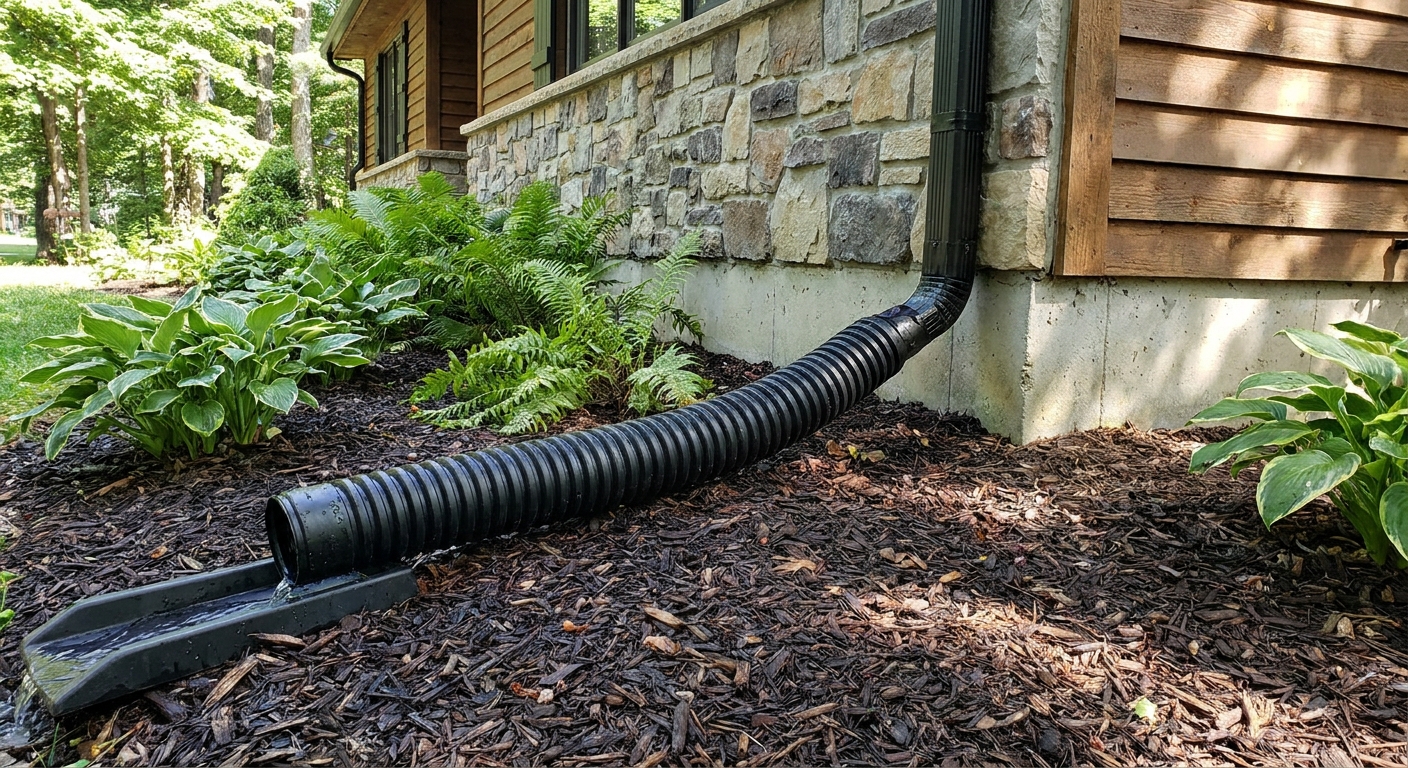
If your basement has a history of water on the floor, active seepage, recurring puddles, or you rely on fans after every storm, cork should be off the list until the water problem is solved. Start with the outside basics like grade and downspouts: Exterior moisture control: yard grade and downspouts. If you need interior drainage and a sump, handle that before any finish materials go in: Interior french drains and sump pumps before basement finishing.
Dents and heavy furniture
Cork is softer than LVP and many laminates. That softness is part of the comfort, but it also means:
- Chair legs, treadmill feet, and sharp furniture glides can dent it.
- Dragging furniture can tear the finish or gouge the surface.
- High heels and pet nails can leave marks depending on product and finish.
Area rugs help, but in a basement gym or workshop-style space, cork is usually not my first pick.
Sunlight fade
Basements with larger windows and walkout doors can get enough UV to shift cork’s color over time. It is not a structural problem, but it can leave a “tan line” if you keep a rug in one spot for years.
Cork types
Not all cork floors behave the same. In basements, the installation method matters almost as much as the material.
Floating click-lock planks
Floating cork planks install like many laminate or LVP systems: the floor is not attached to the slab. In basements, that can be a plus because you can include a moisture-rated underlayment and you are not relying on adhesive performance over a vapor-emitting slab.
Watch-outs:
- You still need a proper vapor strategy. “Floating” does not mean “immune.”
- Confirm the core. If it is HDF, make sure the product is rated for below grade and follow the manufacturer’s underlayment and seam details.
- The slab needs to be flat. Click systems do not like humps or dips.
- You need expansion gaps at the perimeter and around posts.
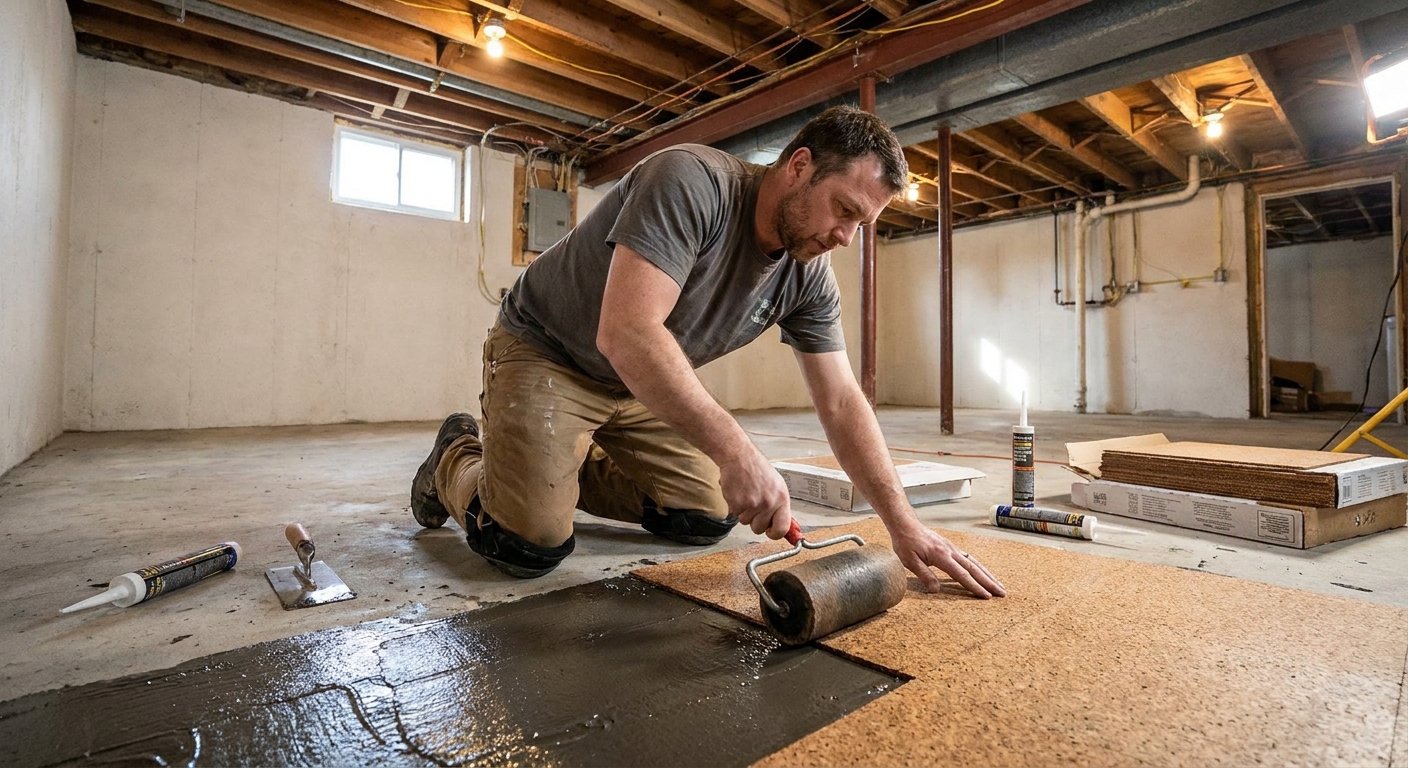
Glue-down tiles or planks
Glue-down cork can feel very solid and can work well in dry, well-controlled basements. But it is far less forgiving if your slab moisture is borderline, and the adhesive and sealer system become critical.
If you are set on glue-down, I consider slab moisture testing and a manufacturer-approved moisture mitigation system non-negotiable. If the slab fails the test, do not “hope it passes later.” Fix the moisture plan or choose another floor.
Basement install requirements
This is the part most basement DIYers underestimate. Cork is comfortable, but below grade it demands prep work. If you do the prep well, cork can be a great floor. If you skip the prep, it can turn into an expensive science experiment.
1) Start with a dry basement
Before you think about flooring, you want a basement that is predictably dry through the worst season. That usually means:
- Downspouts extended away from the foundation
- Soil graded to shed water away from the house
- Foundation cracks sealed when needed
- Sump and drainage addressed if you have hydrostatic pressure issues
If you are still working through moisture control, spend time in our moisture section first: Moisture control.
2) Measure slab moisture and plan for vapor
For basements, I treat the slab like it is always trying to move moisture upward. Your job is to decide how you will handle that moisture so it does not end up in your cork.
Common approaches include:
- Manufacturer-approved vapor barrier underlayment for floating floors
- Moisture mitigation coating or primer systems for glue-down floors (only when approved for your product)
- A raised subfloor system that creates a capillary break and a warmer surface
One clarification that matters: surface sealers and finishes protect the top of the cork from spills and wear. They do not “block” vapor drive coming up through a slab. Your vapor plan lives under the floor.
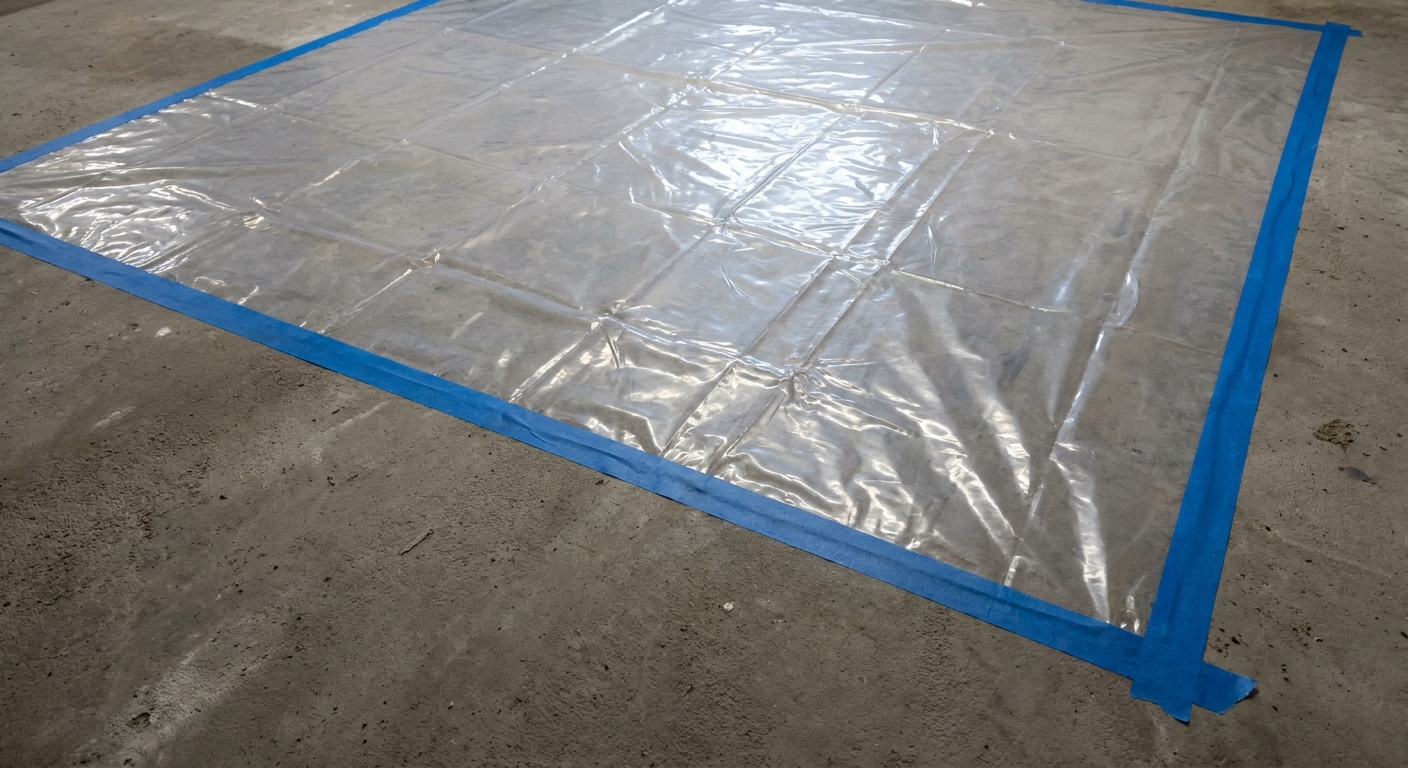
If you are already building out the basement, it is worth thinking about the whole assembly, including any vapor barrier strategy you are using elsewhere: How to install a vapor barrier before basement framing.
3) Get the slab flat
Click-lock cork needs flatness more than it needs “level.” A basement slab can be sloped and still work fine as long as it is not wavy. If you have ridges and dips, you will feel it underfoot and you can stress the locking joints.
Most flooring manufacturers publish a flatness tolerance (often expressed as a maximum variation over 6 to 10 feet). I am not going to pretend there is one universal number for every cork product. Check your exact spec sheet, then actually measure with a long straightedge before you start clicking planks together.
If you are flattening for a floating floor, the same techniques used for LVP often apply: Level an uneven basement concrete floor for vinyl plank.
4) Control humidity year-round
Even if liquid water never hits the floor, humidity can. Cork and HDF cores expand and contract with seasonal changes. Basements that sit at high RH all summer are where flooring starts showing symptoms like cupping, edge lift, and gaps at joints.
Most manufacturers want the space kept in a relatively tight range, commonly somewhere around 35 to 55 percent RH (sometimes up to about 60 percent depending on the product). The only number that matters is the one in your flooring instructions. If you cannot realistically hold your basement in that range, pick a different floor.
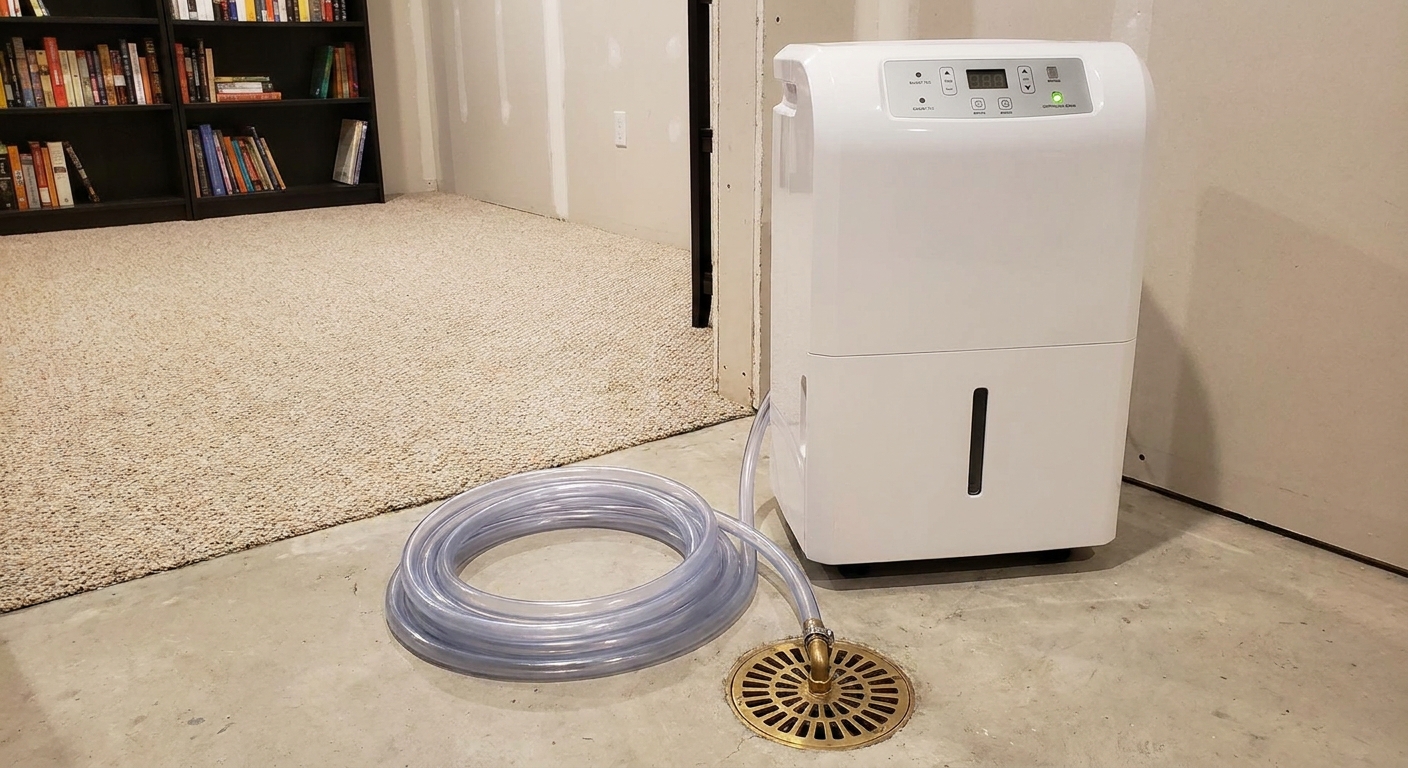
A dehumidifier is not optional in many climates. It is part of the floor system. If you want help sizing and thinking through drain options, here is my guide: Basement dehumidifier sizing and system options.
5) Acclimate the flooring
Cork products are sensitive to temperature and humidity swings, and HDF-core products especially do not like being rushed. Bring the material into the finished space and acclimate it exactly as the manufacturer requires (time, temperature range, and whether it stays boxed or gets opened). This is boring, but it prevents a lot of headaches later.
6) Use the right underlayment
For floating cork, use an underlayment that is approved by the flooring manufacturer and rated for below-grade use. Avoid stacking random foam pads to “make it softer.” Too much compressibility can cause joint failure over time.
Sealing and spill protection
Many cork floors come prefinished, and some cork tiles are site-finished after installation. Either way, sealing is where cork goes from “nice natural material” to “more resilient surface.” Just keep the roles straight: topcoats help with wear and spills, but they do not replace moisture and vapor control under the floor.
Prefinished cork
Prefinished cork often has a factory finish on the wear layer, but the weak points are usually:
- Click-lock joints and micro-bevels
- Perimeter edges near exterior doors or utility areas
- Transitions at bathrooms, bars, or laundry zones
Some manufacturers allow an additional topcoat or seam sealer, others do not. Follow the product’s instructions exactly, because the wrong coating can cause adhesion problems, hazing, or warranty issues.
Site-finished cork
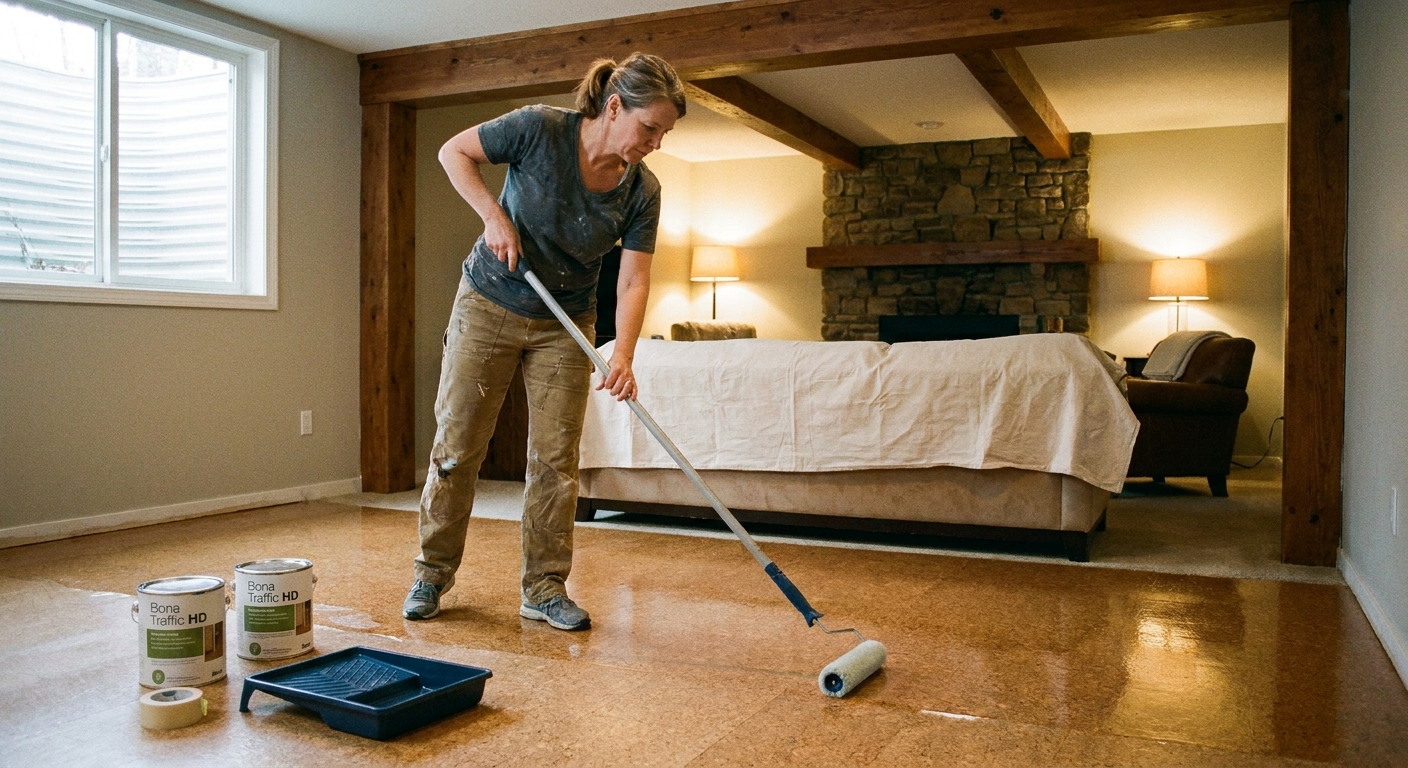
With unfinished cork tiles, the typical goal is to build a continuous protective film over the surface so minor spills do not soak in. The best systems are the ones that seal the top surface and reduce water entry at joints.
Key habits that help:
- Coat counts matter. A single coat is rarely enough for a basement traffic pattern.
- Respect cure time. Putting furniture down too early can trap solvents or imprint the finish.
- Keep water events small. Cork can handle a spilled drink. It cannot handle a slow leak or a wet-mat situation where moisture sits for days.
Wet zones and bathrooms
I will be direct about this: I do not like cork in a basement bathroom, laundry area, or behind a wet bar unless you have an unusually controlled setup and the manufacturer explicitly allows it. Those zones are where little water events turn into big problems, especially at seams and around toilets, sinks, and appliances.
If you love cork, a common compromise is to keep cork in the main living area and switch to a more water-tolerant surface in the wet zones, with a clean transition in between.
Where cork works well
I like cork most in basements that are already well-controlled for water and humidity, and where comfort is the main goal.
- TV room or home theater: Warm underfoot and helps soften sound.
- Guest bedroom: Comfortable barefoot feel in the morning.
- Home office or playroom: Slight cushion is nice for long standing or sitting on the floor.
If your basement doubles as a mudroom, workout room, or laundry area, I lean toward more waterproof-friendly surfaces or a subfloor plus a resilient plank designed for wet conditions.
When I choose something else
Cork is not a universal basement winner. I would steer you away from it if any of these are true:
- Your slab fails moisture testing and you do not want to invest in mitigation.
- You have had water on the floor within the last year or two.
- The space will see heavy equipment, rolling loads, or sharp point loads.
- You want a “set it and forget it” floor with minimal maintenance.
If you are deciding between other common basement-friendly choices, this comparison can help frame the trade-offs: Luxury vinyl plank vs laminate for basements. And if you are still exploring categories, here’s our hub: Flooring options.
Care and cleaning
Cork is not fragile, but it does reward low-drama cleaning habits. The basics I stick to:
- Vacuum or sweep grit regularly (grit is finish sandpaper).
- Use a damp, not wet, microfiber mop and a cleaner approved for your finish.
- Avoid steam mops.
- Wipe spills quickly, especially around exterior doors and utility areas.
- Use felt pads and wide furniture feet to prevent dents.
My cork checklist
If you want the quick gut-check I use before recommending cork to a friend, it’s this:
- I can keep basement humidity in the range my flooring manufacturer requires.
- I have addressed exterior drainage and any seepage issues.
- I have tested slab moisture emissions, and the results fit the flooring system I’m using.
- The slab is flat enough for click-lock joints to stay happy, based on the product’s tolerance spec.
- I am using the manufacturer-approved underlayment, adhesive, and moisture system for below grade.
- I have acclimated the flooring as directed.
- I accept that cork is softer than LVP and will show dents if abused.
Do those things and cork can be one of the most pleasant basement floors to live on. Skip them and it can turn into a slow-motion moisture problem that is miserable to diagnose after the room is finished.
FAQ
Is cork flooring mold-resistant?
Cork has natural properties that resist microbial growth better than some materials, but in a basement the deciding factor is moisture exposure. If moisture gets trapped under or within the floor, you can still get moldy odors and growth in adjacent materials. Moisture control and vapor management come first.
Can I install cork directly on concrete?
Sometimes, but it depends on the product and your slab conditions. Many basement installs need a vapor-rated underlayment (floating) or a manufacturer-approved moisture mitigation system (glue-down). “Directly on concrete” without a vapor plan is where many failures start.
Does cork need a subfloor in a basement?
Not always, but a subfloor system can improve warmth and reduce moisture risk by creating a capillary break and a more stable base. If your basement runs cold or you are sensitive to moisture risk, a subfloor is often worth the thickness and cost.
Is cork better than carpet for damp basements?
In a damp basement, I would fix the dampness before installing either. Carpet can hide moisture problems and get musty fast. Cork can swell or cup if moisture is persistent. If you are considering carpet, this may help: Best carpet and pad choices for damp basements.